Liz Krieger

Colostrum supplements are having a full-blown moment. TikTok calls it “liquid gold,” influencers are chugging it before their morning coffee, and it’s suddenly sitting next to the collagen at every health food store. Some tout them as a near-magical elixir for gut health, immunity, and glowing skin—but do colostrum supplements actually live up to the hype, especially for women navigating perimenopause and menopause? Short answer: the early research on gut and immune support is genuinely interesting, but the data is thinner—and mostly done in athletes, not midlife women. Keep reading to learn what the science says, and learn how Midi Health clinicians can help find the solutions to fix what’s really going on.
Scroll social media long enough, and you’ll probably hear about the unsung benefits of colostrum supplements. Fans of these dietary supplements swear about how they help improve gut health, support the immune system, or make your skin glowy and firm.
But do colostrum supplements actually work? Here’s the honest, non-hype-y answer: Colostrum’s best-studied effects are on the gut lining and, to a lesser degree, immune resilience—and even that evidence comes mostly from small trials in athletes, not midlife women. The skin and weight-loss claims you’re seeing on Instagram are running well ahead of what’s actually been proven in humans.
That gap matters if you’re a woman in your 40s, 50s, or 60s. Bloating, sluggish digestion, and a sense that your immune system isn’t quite what it used to be are extremely common complaints during perimenopause and menopause. These are exactly the types of concerns colostrum supplements promise to ease, even though almost none of the research has actually been focused on women in midlife.
Below: what colostrum is, what the evidence supports (and doesn’t), safety considerations, and how to choose a decent product if you want to try it.
What Are Colostrum Supplements, Exactly?
Colostrum is the thick, nutrient-dense, yellow-hued, “first milk” that mammals—including humans and cows—produce for the first few days after giving birth, before regular milk comes in. It’s packed with antibodies and growth factors meant to jump-start a newborn’s immune system and gut development.
Colostrum supplements use bovine colostrum, meaning it’s harvested from dairy cows in the first 24 to 48 hours after calving, not human colostrum. It’s sold as colostrum powder, capsules, or liquid, and researchers are mainly interested in a handful of bioactive compounds inside it: immunoglobulins (antibodies), lactoferrin, growth factors like IGF-1 (insulin-like growth factor 1), and antimicrobial peptides.
None of this is new science, by the way—bovine colostrum has been studied in sports nutrition and clinical settings for decades. What’s new is the hype behind it. Hot-topic wellness trends, not a scientific breakthrough, are why it’s suddenly everywhere.
What Does the Research Actually Show on Colostrum Supplement Benefits?
Here’s a scannable rundown of the actual colostrum supplement benefits under study—for gut health, immunity, exercise recovery, and skin—versus what’s still speculative. Most human trials are small, short, and conducted in athletes, so the benefits of colostrum for adults outside that narrow population are less certain than what you may have heard. Here’s a rough way to think about the evidence strength across categories:
- Most consistent evidence: gut barrier support, mainly in people under physical stress, such as athletes, intensive care unit (ICU) patients, and people who use nonsteroidal anti-inflammatory drugs (NSAIDs) such as ibuprofen or naproxen.
- Promising but mixed evidence: upper respiratory infection frequency, mostly in athletes and students
- Preliminary/early evidence: exercise recovery and muscle-damage markers
- Very thin, mostly non-human evidence: skin hydration and “glow”
Keep reading to learn more of the ins-and-outs on what the research says in each area.
Colostrum for Gut Health
This is the category with the most legitimate research behind it. Several studies have looked at whether colostrum can support the gut lining and reduce “leaky gut” (intestinal permeability)—the term for when the tight junctions between gut cells loosen and let things leak through that normally wouldn’t.
A 2019 randomized, double-blind trial in critically ill ICU patients found that bovine colostrum supplementation significantly reduced markers of intestinal permeability and lowered rates of diarrhea compared to placebo—though this was a hospitalized population, not healthy women at home, so it’s not a direct reflection on everyday supplementation.
How about healthy people under physical stress? A 2024 meta-analysis pooling 10 randomized trials in athletes found colostrum significantly reduced gut permeability markers—meaning that it essentially strengthened the lining of the digestive tract. A related 2022 systematic review of 9 studies came to a similar conclusion but was blunt about the caveat: sample sizes are small and better-designed trials are still needed.
One frequently cited study is worth flagging for its size: A 2016 trial testing zinc carnosine (a health-food product) and bovine colostrum against heat-and-exercise-induced gut permeability found real protective effects—but the study included just 8 participants. Interesting, but not proof.
Does any of this translate to less bloating in a midlife woman who isn’t running marathons or dealing with a critical illness? That’s the honest gap in the research—almost nothing has tested colostrum specifically in midlife women’s digestion. What we do know is that the gut microbiome shifts as estrogen declines during perimenopause and menopause, and that estrogen itself appears to help maintain the gut barrier—which is partly why bloating and digestive changes are so common in this life stage.
Whether colostrum meaningfully helps that specific process in women is still an open question, not a settled one. If bloating is your main concern, talk with a healthcare professional, such as a Midi clinician, about how to find relief. Midi’s guides to probiotics for menopause and menopause bloating also cover strategies with more direct evidence behind them.

Colostrum for Immunity and Respiratory Health
The other major research thread is upper respiratory tract infections (URTIs), which are essentially colds. Multiple double-blind trials in athletes have found colostrum supplementation can reduce the frequency of symptomatic days during heavy training.
A 2023 randomized, triple-blind, placebo-controlled trial went a step further and tested colostrum in medical students—not athletes—over 107 days, and found a significant reduction in symptomatic URTI days in the colostrum group compared to placebo. That’s a meaningful expansion beyond the usual athlete-only data.
Meanwhile, a 2016 meta-analysis of 5 randomized trials found that colostrum reduced the number of days that athletes experienced upper-respiratory symptoms by around 44% compared to placebo—a meaningful effect, though the researchers caution that the studies they looked at were small and several had a high risk of bias.
Data in the general adult population—and specifically in midlife women—remains thin. And to state the obvious: Colostrum is not a substitute for good sleep or standard preventive care.
True Stories Of Transformation
Colostrum Benefits for Women: Skin, Energy, and Midlife Changes
The so-called colostrum benefits for skin, energy, and general midlife changes are where the hype gets furthest ahead of the science.
The “glow” claims for skin lean heavily on colostrum’s growth factor content (IGF-1 and epidermal growth factor, aka EGF), and there is some cell-culture research showing bovine colostrum can influence collagen production and protect skin cells from UV damage in a lab dish. But this was observed on isolated skin cells in a lab; this effect has not been shown in humans.
Direct human evidence for oral colostrum improving skin hydration or wrinkles is scarce, largely because much of what you swallow gets broken down in digestion before it could theoretically reach the skin. If visible skin firmness is your actual goal, collagen peptides have far more human clinical trial data behind them.
The appetite, body composition, and “recovery” claims are similarly overstated for a general audience. What’s actually been studied is muscle-damage recovery in athletes: A very small 2017 randomized trial in 18 professional and semi-professional soccer players, partially funded by a colostrum supplement manufacturer, found a low dose (3.2 g/day) of colostrum sped up recovery markers after intense exercise, compared to whey protein. That’s an interesting finding, but the observed change in inflammatory markers may or may not have an impact on performance or wellbeing or any other clinical outcome.
Here’s the more useful framing: Perimenopause and menopause bring real changes to gut function, energy, and skin, largely driven by declining estrogen. Colostrum’s studied effects—on gut lining and possibly immune resilience—touch on some of the same territory. But a colostrum supplement can, at best, play a supporting role. It’s likely not going to completely correct symptoms on its own.

Colostrum Side Effects and Who Should Avoid It
The most commonly reported colostrum side effects are mild and include gas and nausea, particularly when starting at a high dose.
Because bovine colostrum is a cow’s milk product, anyone with a milk allergy should avoid it entirely, and people who are lactose intolerant should be cautious, get the green light from a healthcare professional, and start with a small amount.
Beyond those with dairy allergies or sensitivities, a few groups should talk to a clinician before trying a colostrum supplement:
- people who are pregnant or breastfeeding
- anyone with a weakened immune system
- anyone currently on medications, particularly immunosuppressants
There’s also an unresolved theoretical question around colostrum’s IGF-1 content and hormone-sensitive conditions, because some research has linked chronically elevated levels of IGF-1 to cancer progression. A study from 2019 found that standard doses of oral bovine colostrum did not raise circulating IGF-1 levels in healthy adults over 12 weeks of use. That’s a little reassuring, but it’s one study, and clinicians still generally recommend anyone with a history of hormone-sensitive cancer check in with their doctor first, since how much intact IGF-1 actually survives digestion in every individual isn’t fully settled.
Finally, quality control is a real issue. Colostrum supplements aren’t regulated like prescription medications are, and contamination or inconsistent potency between brands and batches has been documented in the sports-supplement literature.
Colostrum Dosing, Timing, and Formats
Remember, the jury is largely still out on how effective colostrum supplements are. But if you’re curious about trying them, you may be wondering about the dosage and timing logistics.
Colostrum comes as powder (mixed into water or smoothies), capsules, or liquid. There’s no single, standardized clinical dose—studies have used anywhere from about 10 to 60 grams a day, divided into two or more doses and most commonly taken for 4 to 12 weeks at a time. The muscle-recovery trial mentioned above used a notably low 3.2 grams a day; many immune-focused studies use 10–20 grams. Compare that range to whatever’s on the label of a product you’re considering—a suspiciously low dose relative to what’s been studied is a fair reason for skepticism.
On timing: Some brands suggest taking it on an empty stomach, but there isn’t strong evidence establishing an ideal time of day. Whatever benefits colostrum offers appear to build gradually with consistent use over weeks—not overnight, despite how what you might have heard. Always follow any unique-to-you guidance from your healthcare professional.
How to Choose a Quality Colostrum Supplement
The quality behind colostrum supplements varies widely between brands. A few things worth checking on a label:
- Third-party testing to confirm purity, potency, and quality
- IgG (immunoglobulin G) content disclosed per serving, ideally with a batch-specific certificate of analysis
- An evidence-informed dose, rather than a token amount
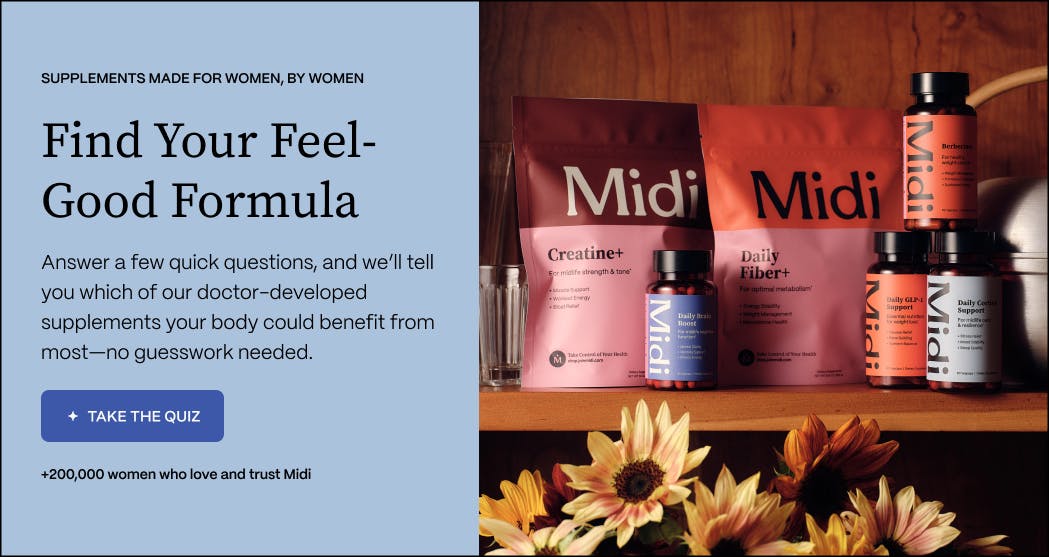
There’s no single best colostrum supplement, as quality depends entirely on the sourcing and testing factors above. And compared to other supplements like fiber, probiotics, or creatine, colostrum still has more inconclusive evidence overall. If you’re deciding where to spend limited supplement budget on gut health specifically, fiber and well-studied probiotic strains currently have more research behind them. (Check out Midi’s evidence-informed, research-backed Daily Fiber+ and Creatine+ supplements.)
So, Is Colostrum Worth It? (And When to Get Expert Support)
Strong maybe. Colostrum may offer some modest gut and immune system benefits but the evidence is lacking, and it rarely addresses the actual root of midlife gut, energy, or immune complaints, which are often hormonally driven.
That’s where a clinician who actually looks at your full picture—gut symptoms, energy, sleep, hormone fluctuations, current supplements—becomes more useful than another bottle on the shelf. A Midi clinician can help sort out what’s genuinely hormonal, what’s digestive, and what evidence-based options (which may or may not include supplements) actually fit your history.
If you’re curious whether colostrum has a place in your specific routine, or want a broader plan for the gut and energy changes of perimenopause, talk to a Midi clinician to get an answer that’s actually about you—not a trend.
Key Takeaways
- Colostrum’s best-supported benefit is gut barrier support, mostly studied in athletes, ICU patients, and people under physical stress—not specifically in midlife women.
- Immune benefits (fewer cold days) have some solid trial support, including one recent study in non-athletes, but the underlying mechanism isn’t well understood.
- Skin and “glow” claims are the weakest link—the human evidence is largely absent; what exists is mostly in vitro cell studies.
- If you have a dairy allergy, colostrum supplements are a firm no; lactose intolerance calls for extra caution and a low starting dose.
- Anyone who has a hormone-sensitive condition, is pregnant or breastfeeding, has a weakened immune system, or takes immunosuppressants, should still check with a clinician.
- Quality varies a lot—look for third-party testing and a dose that matches what’s actually been studied.
Frequently Asked Questions (FAQs)
Who should not take colostrum?
People with a cow’s milk allergy should avoid colostrum supplements entirely. Those who are pregnant, breastfeeding, immunocompromised, on medications, or have a history of hormone-sensitive cancer should talk to a doctor first, since colostrum contains growth factors like IGF-1 that haven’t been fully studied in these groups.
What will happen if I take colostrum every day?
Most people tolerate daily use well, based on existing trials, with mild gas or bloating as the most common early side effect. Benefits, where they exist, appear to build gradually over several weeks of consistent use rather than immediately.
Does colostrum help with SIBO?
SIBO—small intestinal bacterial overgrowth, when bacteria that normally live in the colon build up in the small intestine and cause bloating, gas, and diarrhea—has no published human trial testing colostrum specifically. One industry-funded 2021 in-vitro study found bovine colostrum strengthened gut-cell barriers against SIBO-associated bacteria in a lab dish—interesting, but far from proof it helps in a real digestive system.
Can you take colostrum if you're lactose intolerant?
Colostrum is derived from cow’s milk, so caution is warranted. Many colostrum products are low in lactose, but if you’re significantly lactose intolerant, start with a small dose and watch for digestive symptoms, or check with a doctor first.
What is the best time of day to take colostrum?
There’s no strong evidence pointing to an ideal time. Some people prefer it on an empty stomach; others take it with food to reduce nausea. Consistency day-to-day likely matters more than the specific hour.
If you’re in perimenopause or menopause and want guidance from clinicians who specialize in women’s midlife health, book a virtual visit with Midi today.
Hormonal change is at the root of dozens of symptoms women experience in the years before and after their period stops.
Our trained menopause specialists can help you connect the dots to guide you towards safe, effective solutions.
Whether you need personalized guidance or a prescription routine to tackle symptoms—including brain fog, hot flashes, sleep trouble, mood swings, and weight gain—we’ve got you covered. Learn more here.
Midi’s mission is to revolutionize healthcare for women at midlife, wherever they live and whatever their health story. We believe that starts with education, to help all of us understand our always-changing bodies and health needs. Our core values guide everything we do, including standards that ensure the quality and trustworthiness of our content and editorial processes. We’re committed to providing information that is up-to-date, accurate, and relies on evidence-based research and peer-reviewed journals. For more details on our editorial process, see here.