


Bioidentical progesterone plays an important role in menopause care, especially if you’re taking estrogen. But if you’re considering it, you likely have questions: What does it actually do? How does it work? Which form is right for you? Here’s what you need to know about bioidentical progesterone, how it protects your uterine lining, what forms are available, and how a clinician (like one at Midi Health) can help you find the treatment that makes sense for you.
When you’re considering hormone therapy to relieve disruptive menopause symptoms, progesterone becomes a key part of the conversation. You may have heard about bioidentical progesterone as one possible option and wondered what it actually does—and what the difference is between prescription forms of bioidentical progesterone and all those over-the-counter (OTC) creams with “bioidentical” labels.
“Bioidentical” means that the progesterone is structurally identical to the progesterone your body produces. It describes the molecule in the hormone and has nothing to do with how the product is regulated. While certain FDA-approved medications and reputable compounded products use the term, some unregulated products use it as well. So, seeing that term on the label doesn’t automatically tell you whether a product is safe or effective.
If you’re drawn to the idea of a hormone that matches the progesterone your body naturally makes, that’s understandable. The good news is that you don’t have to choose between “natural” and medically sound. Bioidentical progesterone can be both: Oral micronized progesterone is chemically identical to the progesterone your body produces, and it’s an FDA-approved prescription medication widely used in menopause care. Compounded micronized progesterone formulations are available by prescription from reputable sources as well.
Read on to learn more about bioidentical progesterone, how it compares with synthetic progestins, what forms are available, what it can—and can’t—help with, and what to know about benefits and risks. And if you’re taking estrogen and have a uterus, we’ll explain why the right form and dose of progesterone matter for protecting the uterine lining.
What Is Bioidentical Progesterone?
Let’s start with the simplest definition: Bioidentical progesterone is progesterone that’s structurally identical to the progesterone your ovaries make.
You may hear that bioidentical hormones come from plants like soy or wild yam. That’s true, but you’re not just consuming a yam in capsule form—the plant compounds have to be chemically converted in a lab to create progesterone that matches the hormone made by your body.
One of the best-known examples is micronized progesterone, sold under the brand name Prometrium (or as a generic). “Micronized” means the progesterone has been broken into super tiny particles, making it easier for your body to absorb.
There are also some compounded versions of micronized progesterone. For example, Midi prescribes FDA-approved progesterone, and it also offers a compounded progesterone. The compounded version doesn’t contain peanut oil, so it can be used by people with peanut allergies. It also allows for dosing flexibility by a clinician for people who are especially sensitive to progesterone.
If you’re considering hormone replacement therapy (HRT, now commonly referred to as menopause hormone therapy, or MHT), micronized progesterone is an established bioidentical option worth discussing with a healthcare professional, like a Midi clinician. This form of progesterone is typically considered the first-line option.

Bioidentical Progesterone vs. Synthetic Progestin
Synthetic progestins are lab-made hormones designed to act like progesterone, the hormone your body naturally makes.
Two of the most common and widely prescribed progestins are medroxyprogesterone acetate (MPA) and norethindrone. Because they’re chemically different from progesterone, they can behave differently in the body and have different side effects than micronized progesterone.
Research now suggests that bioidentical micronized progesterone may pose less risk to breast and heart health than synthetic progestins, particularly MPA. Your overall risk also depends on which estrogen you take, how you take it, the dose, how long you use it, your age, and your health history.
What Does Bioidentical Progesterone Actually Do?
Progesterone’s role in HRT is to protect your uterine lining. If you have a uterus and take a systemic form of estrogen (like a patch, pill, gel, or spray), progesterone or progestin is generally prescribed to help keep estrogen from making your uterine lining grow too much, because that can raise the risk of uterine cancer. Think of it as the bouncer at the door: Estrogen can come in, but progesterone keeps things from getting out of hand.
Progesterone may have effects beyond the uterus, too. As an added bonus, some women find that micronized progesterone helps them feel calmer or sleep better. (That’s why you’re advised to take progesterone at bedtime.)
During perimenopause, progesterone may also be used as part of some treatment approaches for heavy or irregular bleeding. Whether it’s the right treatment for you depends on what’s causing the bleeding and what else is going on hormonally.
You’ll also hear claims that progesterone can improve skin, bones, mood, or libido. Some of these ideas have early research behind them—especially mood effects—but the evidence remains limited at this time, and some claims have gotten ahead of the science. Promises that progesterone improves libido, for instance, are largely unproven.
And one important thing to know: Progesterone is not usually the hormone doing the heavy lifting for hot flashes. In systemic hormone therapy, estrogen is the primary treatment for hot flashes and night sweats. Progesterone’s main role is protecting the uterine lining when estrogen is used.
True Stories Of Transformation
What Forms Does Bioidentical Progesterone Come In?
Bioidentical progesterone comes in several different forms. The specific form you take can affect how much your body absorbs, how it works, and whether it can reliably protect the uterine lining.
The primary forms include:
- Oral capsules: This is the standard approved form of micronized progesterone. Because it can bring on sleepiness, it’s usually taken at bedtime. (So, if you’re wondering, “Is Prometrium bioidentical?”—yes, it is.)
- Vaginal capsules or suppositories: Progesterone can also be inserted into the vagina. This is considered off-label for some uses and may be an option for women who want to avoid some of the effects of taking it by mouth (for instance, the sleepiness factor).
- Creams and gels: These are absorbed through the skin, but absorption can be unpredictable. That’s why progesterone creams and gels generally should not be relied on to protect the uterine lining.
- Pellets: Progesterone can be delivered through pellets inserted under the skin, but pellets are not FDA-approved for this use. Once a pellet is inserted, the dose can't simply be adjusted if you experience side effects. That’s one reason why many clinicians, including those at Midi, don’t recommend hormone pellets.
- OTC progesterone creams: These products can sound similar to prescription progesterone, but they’re not the same thing—and they’re not regulated as a prescription. The amount of progesterone in these creams is typically lower than prescription progesterone: 15 to 25 milligrams (mg) per dose versus the prescription strength of 100 to 300 mg per dose. And how much your body absorbs can vary, so the effective amount doesn’t guarantee a therapeutic dose. As a result, OTC progesterone does not reliably protect the uterine lining, which is typically needed as part of HRT. When women with a uterus receive HRT that typically contains an estrogen, they also need enough progesterone to avoid uterine lining buildup and the associated increased risk of uterine cancer. OTC progesterone creams don’t reliably offer this protection, while prescription-strength formulations do.
Ultimately, the word “bioidentical” doesn’t tell you how well a product works by itself. The form, dose, route, and quality of the product all matter.
Who Might Benefit From Bioidentical Progesterone?
Progesterone isn’t a one-size-fits-all hormone. Whether it makes sense for you depends on your symptoms, your health history, and whether estrogen is part of your treatment plan.
You may be a candidate for progesterone if:
- You have a uterus and take systemic estrogen for menopause, so you need progesterone to manage your uterine lining.
- You’re in perimenopause and dealing with heavy or irregular bleeding. Progesterone may be part of a treatment approach, depending on factors including the cause of the bleeding.
- You haven’t tolerated a synthetic progestin well. Some (not all) women who experience unwanted effects with a synthetic progestin may find that micronized progesterone feels different or is easier to tolerate.
Progesterone isn’t a fit for everyone, and some health conditions can make it unsafe. If you have a history of certain cancers, liver disease, stroke, blood-clotting disorders, or heart or cardiovascular disease or if you’re experiencing unexplained vaginal bleeding, your clinician will consider whether it’s right for you on a case-by-case basis. And if you’ve had a hysterectomy, uterine protection isn’t needed, though your clinician might recommend progesterone for other reasons.
Bioidentical Progesterone Side Effects and Risks
Generally, bioidentical progesterone is very well-tolerated by the majority of women who take it. Still, you may notice a few side effects, including:
- drowsiness
- dizziness
- bloating
- breast tenderness
- headache
- mood changes
When first taking oral progesterone, you should be mindful of combining it with alcohol or other medications that make you sleepy. Your clinician can help you check for potential interactions, especially if you take sleep medications, anti-anxiety medications, opioids, or other sedating drugs. (Many women take oral bioidentical progesterone before bedtime, finding it helps them get a better night's sleep.)
For many women, these effects improve within a few days or weeks as the body adjusts. If you’re still feeling unusually groggy, dizzy, or just “off,” your clinician may adjust your dosage, formulation, or timing. Finding the right regimen can take some trial and error, especially during the first few months.
A small number of women simply don’t tolerate progesterone well, even after adjustments. If you feel consistently worse while taking it, talk with a healthcare professional, like a Midi clinician, about your options, rather than trying to push through it.
How Is Bioidentical Progesterone Dosed?
There’s no one right dose for all women when it comes to progesterone. The “right” progesterone dose is the one that fits your body, hormone regimen, and goals.
Your dose depends on many factors, and your clinician may adjust it based on symptoms, bleeding, and side effects. Know that tweaks are normal during the first few months, as you and your clinician figure out what works best. Just don’t make changes on your own.
At Midi, 100 mg daily is a common starting dose for many women taking progesterone as part of HRT, and it’s typically the lowest dose that still manages your uterine lining if also receiving estrogen therapy. Some women can benefit from higher doses of 200 or 300 mg, particularly when aiming for better sleep support. Your clinician can help find the dose that gives you the benefits you’re looking for while keeping side effects in check.
You’ll also decide with your clinician whether continuous or cyclical dosing makes more sense for you. Continuous dosing means taking progesterone every day; cyclical dosing means taking it for part of each month. These approaches can lead to different bleeding patterns, and what’s appropriate for you depends on your stage of menopause and personal needs.
What About the Progesterone Cream You Can Buy Online?
OTC progesterone cream may seem like an easier alternative to medication. But there’s an important distinction: OTC progesterone creams are not the same dose or delivery as reliable, research-backed prescription progesterone medications.
Many progesterone creams are sold as cosmetics or supplements, not approved drugs, so they haven’t been evaluated for dose consistency and effectiveness. And if you see “wild yam cream,” know that this is not progesterone treatment. Wild yam contains diosgenin, a plant compound that can be chemically converted into progesterone in a laboratory—but your body doesn’t make that conversion on its own.
Talk with a clinician, like one at Midi, about expert-recommended prescription progesterone options that may be covered by insurance and give you a reliable dose and predictable absorption. A Midi clinician can prescribe one of several different types of oral micronized progesterone: Prometrium or its generic version, as well as a compounded micronized progesterone version.
How to Decide With a Clinician
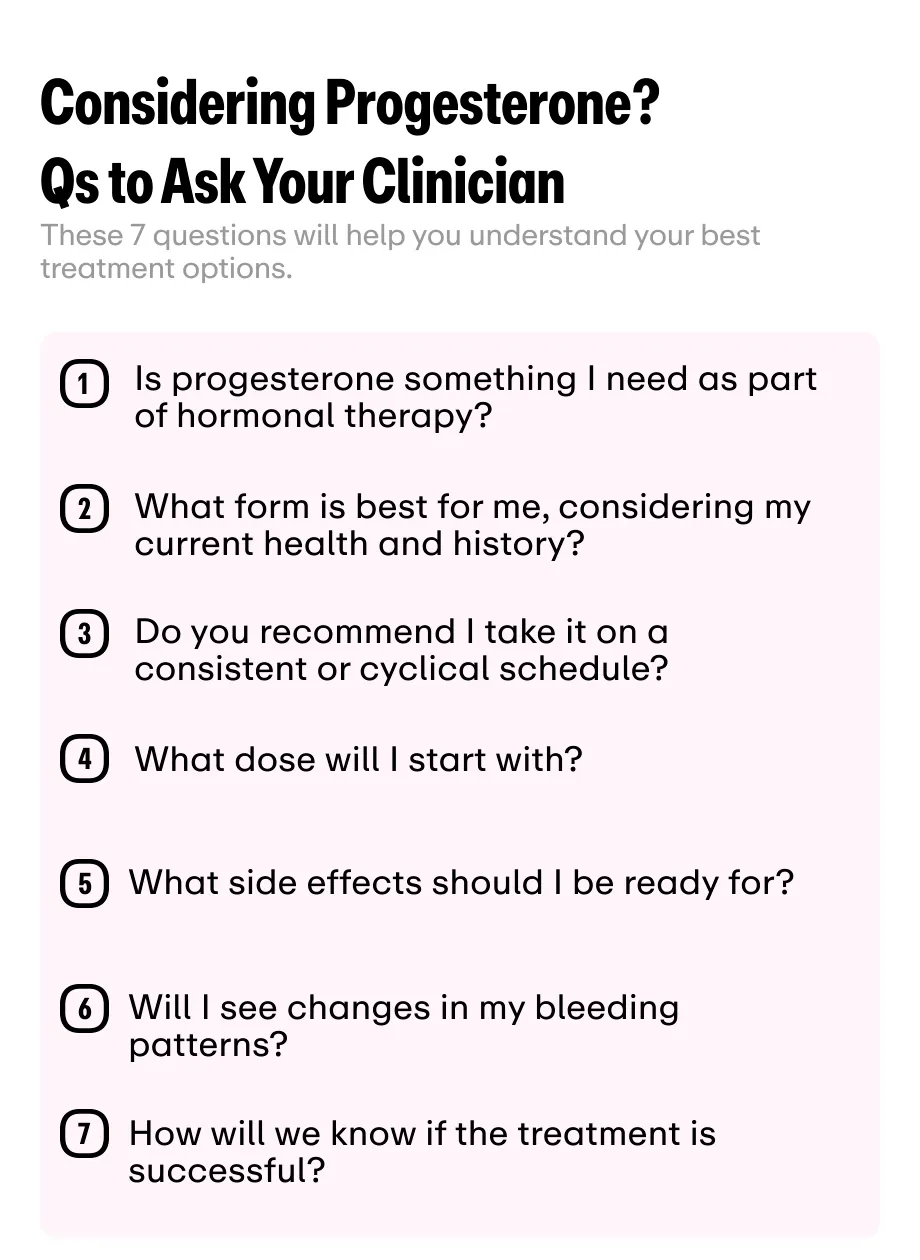
To find the right form and dose of progesterone for you, have a talk with your clinician and go over the questions below. The more you understand your options, the easier it is to have a productive conversation.
You might ask:
- Do I need progesterone as part of my hormone therapy?
- Which form makes the most sense for me?
- Should I take it continuously or cyclically?
- What dose should I start with?
- What side effects or bleeding changes should I expect?
- How will we know whether my treatment is working?
Your clinician will also consider the bigger health picture, not just your immediate symptoms. That usually means reviewing your medical and family history, whether estrogen is part of your treatment plan, and whether you have a uterus. All of these details can affect which hormone therapy approach is best for you.
And if you’re feeling overwhelmed as you try to figure it all out, know that you don’t have to do it solo. Midi offers clinician-led care designed specifically for women in midlife, with support to help you build a hormone plan that fits your symptoms, health history, and goals—and adjust it as your needs change.
Key Takeaways
- “Bioidentical” describes the hormone, not the product. It means the progesterone is chemically identical to the hormone your body makes.
- Oral micronized progesterone is a form of bioidentical progesterone that a clinician can prescribe. It’s structurally identical to your body’s progesterone and is an established prescription option for menopause care.
- If you are allergic to peanuts, discuss custom formulations with a Midi clinician and explore alternatives that avoid the peanut oils often found in standard oral progesterone formulations.
- Form and dose of progesterone matter. Oral, vaginal, and topical forms work in different ways, and creams may not provide reliable absorption or protection of the uterine lining.
- “Natural” doesn’t automatically mean better or safer. OTC progesterone creams and wild yam products aren’t equivalent to prescription progesterone medications and may not give you the uterine protection you need if you are also taking estrogen.
- Finding the right regimen can take some fine-tuning. Your symptoms, health history, estrogen use, side effects, and whether you have a uterus all help determine the right form, dose, and schedule.
Frequently Asked Questions (FAQs)
What is the best bioidentical progesterone?
The right progesterone for you depends on your health history, symptoms, and goals. That said, oral micronized progesterone, available as Prometrium or a generic capsule, is an FDA-approved option with well-established safety and effectiveness.
Does insurance cover bioidentical progesterone?
Yes, FDA-approved bioidentical progesterone is commonly covered by many insurance plans (though it depends on your insurance). Compounded versions may be excluded from insurance coverage.
Can bioidentical progesterone cream protect the uterine lining?
No, bioidentical progesterone cream can’t reliably protect the uterine lining from overgrowth. It doesn’t absorb well through the skin, which can lead to abnormal thickening of the lining.
Is bioidentical progesterone safe to take long term?
Bioidentical progesterone is generally considered safe in the long term, given that it’s prescribed appropriately and monitored by a clinician.
Can I take the oral bioidentical progesterone if I am allergic to peanuts?
Many standard FDA-approved progesterone pills, such as Prometrium, suspend the hormone in peanut oil. Ask your Midi clinician for an alternative, as you may need a custom prescription that avoids peanut oil exposure.
If you’re in perimenopause or menopause and want guidance from clinicians who specialize in women’s midlife health, book a virtual visit with Midi today.
Hormonal change is at the root of dozens of symptoms women experience in the years before and after their period stops.
Our trained menopause specialists can help you connect the dots to guide you towards safe, effective solutions.
Whether you need personalized guidance or a prescription routine to tackle symptoms—including brain fog, hot flashes, sleep trouble, mood swings, and weight gain—we’ve got you covered. Learn more here.
Compounded drug products are not FDA approved. The FDA does not evaluate compounded drug products for safety, effectiveness, or quality. Prescription products require an online consultation with a healthcare professional, who will determine if an individual is eligible for a prescription if medically appropriate in their independent clinical judgement. Full safety information, provider consultation requirements, and restrictions, are available at https://www.joinmidi.com/.
Midi’s mission is to revolutionize healthcare for women at midlife, wherever they live and whatever their health story. We believe that starts with education, to help all of us understand our always-changing bodies and health needs. Our core values guide everything we do, including standards that ensure the quality and trustworthiness of our content and editorial processes. We’re committed to providing information that is up-to-date, accurate, and relies on evidence-based research and peer-reviewed journals. For more details on our editorial process, see here.