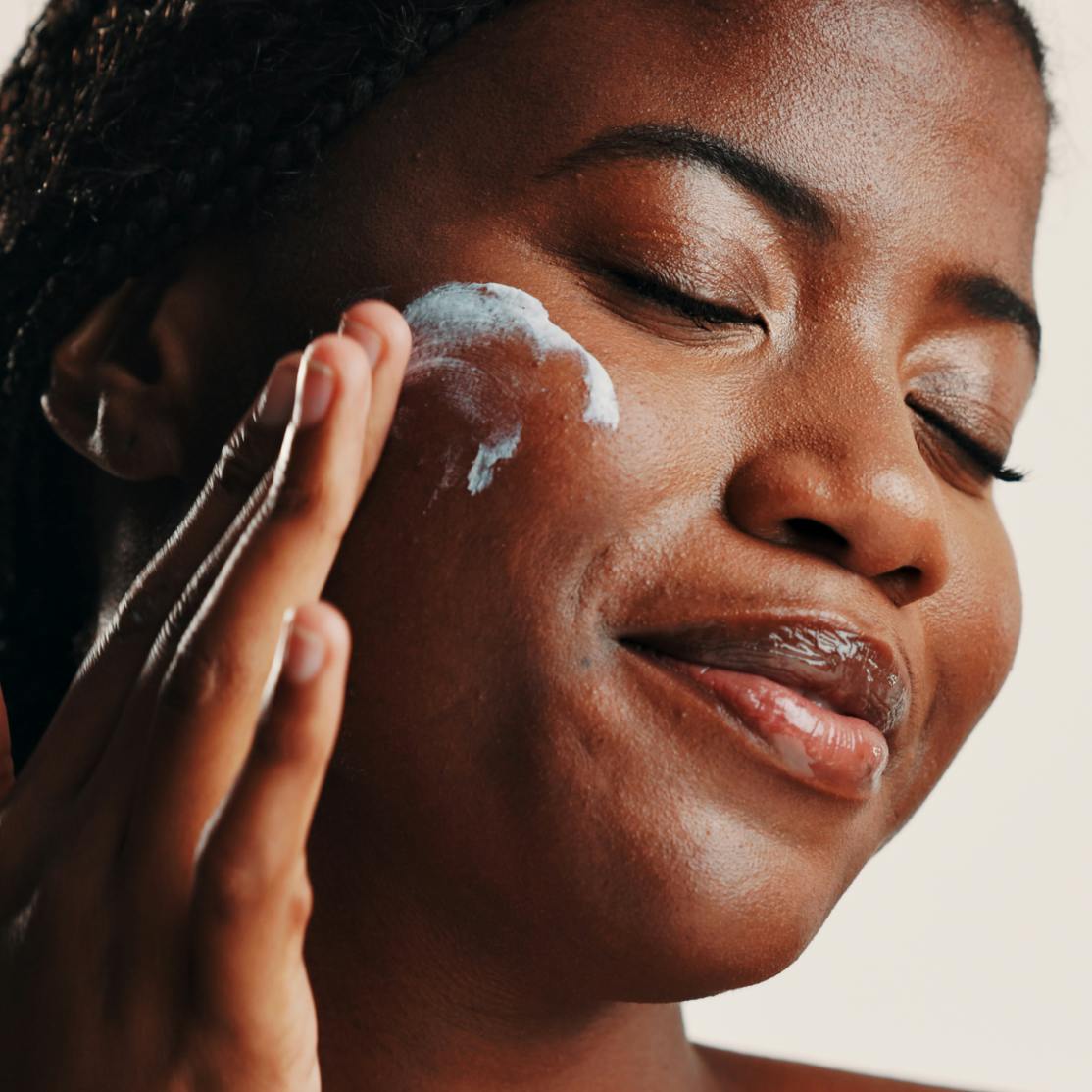



Argireline is often pitched as the answer for anyone who wants to soften expression lines without needles, who wants to avoid a procedure with a huge price tag, or who simply fears the “frozen” look often associated with Botox injections. But if a topical serum claiming to be “Botox in a bottle” sounds too good to be true, that’s because it probably is. While the topical peptide ingredient Argireline can be effective at improving the appearance of fine lines on your face, it just doesn’t work in the same way as an injectable neuromodulator drug like Botox does. Keep reading to learn more about Argireline, from where it may help to what matters most in a midlife skin care routine, and talk with a Midi Health clinician for personalized guidance.
Peptides are touted all over social media as miracle workers for everything from overall longevity to smoothing away wrinkles. Peptides in skin care are composed of amino acids, the building blocks of proteins. They act as messengers in the skin in different ways, helping keep your complexion firm and supple over time. Some peptides do that by prompting the production of proteins like collagen and elastin, while others work to quiet the muscle contractions that cause expression lines. Argireline is a peptide in the latter camp.
More specifically, Argireline is a synthetic peptide that theoretically mimics the line-softening effects of an injectable neuromodulator like Botox, Dysport, and Daxxify, among others. But can this topical peptide really smooth wrinkles as well as an injectable neurotoxin like Botox without the expensive cosmetic procedure—and without the hassle of needles?
While Argireline is often billed as liquid Botox, this topical peptide is most definitely not the same ingredient as injectable Botox, and it does not work in the same way to dramatically smooth wrinkles. So, what can Argireline really do for your skin? Keep reading to learn everything you need to know about this skin-care peptide.
Argireline: What It Is and Why It Gets Called Liquid Botox
Argireline is a noninvasive topical peptide ingredient that may have subtle wrinkle-softening benefits. Argireline is the trade name for a neurotransmitter peptide called acetyl hexapeptide-8, formerly known as acetyl hexapeptide-3. This synthetic peptide is found in over-the-counter (OTC) serums and is designed to prevent the release of a neurotransmitter that causes muscle contractions, mimicking the effects of an injectable neurotoxin like Botox.
Neurotransmitter peptides have been studied for their ability to improve the texture of the skin and soften lines and wrinkles, which is why this type of peptide in skin care is often called “Botox in a bottle.” However, research shows that this is an overexaggeration. Like many good skin care ingredients, a topical neuropeptide may help smooth skin, but the wrinkle-relaxing results won’t be as transformative as a cosmetic procedure with Botox. (More on this below.)
Why Midlife Women Are Searching for Argireline
Most women over age 40 want to smooth wrinkles but don’t want to look remarkably different or “frozen” by a cosmetic procedure. Not to mention, many people are squeamish about having needles injecting a neurotoxin into their face.
Hormonal changes during perimenopause are part of why wrinkles start to appear in midlife. Estrogen, which prompts skin cells like fibroblasts to make more collagen, dwindles—and lower estrogen levels mean less collagen and elastin. This leads to fine lines, wrinkles, and sagging skin.
Reduced estrogen not only affects collagen and elastin, but also the production of natural hyaluronic acid and lubricating ceramides in the skin. This makes the skin’s outer layer, or the stratum corneum, dry and vulnerable because there are fewer natural lipids to maintain moisture in the skin.
This dryness and collagen loss in midlife gets combined with years of repeated facial movements, such as lifting your eyebrows, frowning, or crinkling your eyes when you smile. Over time, these muscle movements create expression lines like crow’s feet and forehead wrinkles, including those deep vertical 11 lines between the brows.
Topical moisturizers in a good skin care routine can help replenish lost lipids and ceramides, and retinoids such as prescription-strength tretinoin or OTC retinol can boost collagen and elastin production over time. But it can take months to see visible improvements, and the results are subtle. It’s no wonder that many women in midlife begin to consider cosmetic procedures like injectable Botox that deliver results within days—especially when a topical product doesn’t seem to be doing enough.
For some women, the thought of needles in your face, not to mention the high cost of injectable treatments (sometimes starting at $500 a pop), may make a “liquid Botox” serum sound well worth a try.
Skin Care Success Stories
Argireline Serum Benefits: Where It May Help
A hydrating serum or lotion that contains acetyl hexapeptide-8, acetyl hexapeptide-3, or the brand name Argireline may help soften the appearance of lines temporarily while also moisturizing skin. Most products that contain a neurotransmitter peptide in the formula also include humectants like hyaluronic acid and glycerin, which work to plump fine lines and boost the smoothing effects.
In turn, this can help improve expression lines and replenish moisture in midlife skin. Bonus: Because these peptides are non-irritating for most skin types, they’re a great option for sensitive skin that can’t tolerate potentially irritating active ingredients like prescription tretinoin or vitamin C.
Why “Botox in a Bottle” Is the Wrong Expectation
An injectable neuromodulator like Botox works directly on the nerve receptors of specific muscles. By injecting a purified form of botulinum toxin type A directly into a facial muscle, it blocks nerve signals to the muscle and paralyzes those muscles temporarily (typically for 4 to 6 months). This prevents them from causing actions that reinforce wrinkles and, consequently, smooths expression lines like forehead wrinkles.
This is very different from putting a topical peptide ingredient like Argireline on top of your skin. A topical formula simply does not have the same kind of wrinkle-erasing effects as an injectable neuromodulator like Botox that fully paralyzes muscle contractions. Argireline theoretically works by inhibiting neurotransmitters that signal muscles to contract, but to penetrate the skin deep enough to effect change, let alone inhibit nerve-to-muscle signals in the body, is a tall order for any topical skin care product. At most, it can relax muscle contractions.
While a recent small study showed that Argireline in a hydrating hyaluronic acid serum had some line-reducing effects, these results weren’t statistically significant, nor did they produce a notable reduction in wrinkles compared to a placebo serum that didn’t include the peptide. What’s more, it’s difficult to determine how much of that fine-line softening came from the hyaluronic acid plumping versus the Argireline itself.
Meanwhile, other research has found that neurotransmitter peptides like Argireline may help soften expression lines over time and with consistent use—but more studies are needed to prove that a topical peptide can penetrate deep enough to significantly inhibit muscle contractions.
By contrast, clinical evidence for Botox is well-established. A Cochrane review of 65 studies involving nearly 15,000 people found that injecting botulinum toxin type A (a Botox-like treatment) reliably reduces wrinkles between the eyebrows and is relatively safe to use, with effects typically lasting 4 to 6 months.
So while Botox paralyzes muscle movement, the Argireline peptide delivers a much more subtle relaxation of facial tension. But although a product with Argireline will deliver much milder results than Botox injections, that doesn’t mean it can’t be helpful. For now, there appears to be no harm and perhaps some benefit in using a non-invasive, hydrating peptide-powered serum like this.

How to Use Argireline in a Real Routine
Argireline seems to produce the best results when used consistently, every day or night, alongside other clinically proven active ingredients.
Because peptides, including Argireline, are typically non-irritating, they can be used with other actives like retinol or antioxidant powerhouse vitamin C. For example, you can apply a hydrating serum that contains Argireline or acetyl hexapeptide-8 under your daily moisturizer with SPF during the day, then pair it with a retinol at night.
Generally, studies show benefits of Argireline at concentrations ranging from 5 to 10%, so you may want to keep your eyes open for products that meet that description. Peptides like Argireline also work well in a formula that contains a combination of peptides to increase the likelihood of clinically backed benefits. For instance, if you want to stimulate collagen and elastin production for firmer skin, then look for a product with signal peptides (palmitoyl pentapeptide-4, palmitoyl tripeptide, palmitoyl tetrapeptide, palmitoyl oligopeptide) in addition to a neurotransmitter peptide like Argireline.
Side Effects, Sensitivity, and Product Questions
As a skin care ingredient, peptides are typically gentle and non-irritating for most skin types and play well with other ingredients in a skin care formula. While there are no known side effects of Argireline, mild irritation or allergy is always possible, especially if you have sensitive skin.
What Matters More than Argireline in Midlife Skin?
There are a few things going on simultaneously during perimenopause and beyond that affect your skin in midlife.
Hormone fluctuations, especially a decrease of estrogen, and the natural aging process hinder the production of everything, including collagen, elastin, and natural lipids. This translates into dry skin, laxity, and fine lines. This process also slows down skin cell turnover, which leads to a buildup of dead skin cells on the surface that cause dullness.
While this sounds like a lot, every one of these skin concerns can be improved with a skin care routine in midlife that includes clinically proven and effective ingredients, from collagen-boosting retinol and antioxidants like vitamin C to hydrating hyaluronic acid and emollient ceramides that moisturize and support the skin’s protective barrier. Dermatologists universally agree that the single best thing you can do to prevent damage like brown spots and wrinkles and protect collagen and elastin degradation is to use a moisturizer with broad-spectrum SPF every day.
What to Evaluate if Your Skin Changes Fast in Midlife
Menopause can trigger a host of symptoms that are confusing and sometimes disconcerting. Your whole body is in a time of transition, and that includes its largest organ: your skin.
Even if you never had dry skin or acne before, you may be dealing with them now—and to add insult to injury, they often happen at the same time. On top of hot flashes, vaginal dryness, and joint pain, a complexion that’s totally out of control is very common. It’s more important now than ever to pay attention to your overall health, including getting optimal sleep and exercise, eating a healthy diet, and managing stress.
If your skin symptoms—whether hormonal acne, wrinkles, or extreme dryness—aren’t improved by your new skin care routine, then it’s a good idea to check in with a clinician. A healthcare professional, like one at Midi Health, can provide personalized advice and, if necessary, prescription medications that can address your particular issues more effectively, whether you’re dealing with skin care woes, disruptive symptoms, or all of the above.

When to Seek Care
Always listen to what your skin is telling you. If it feels itchy or stings when you put anything on top of it, if it’s red and irritated, or if it starts to break out, then stop using everything besides a mild, fragrance-free cleanser and a very gentle, fragrance-free moisturizer without active ingredients. If symptoms persist for more than a week, it’s a good idea to see a dermatologist.
Key Takeaways
- Argireline (acetyl hexapeptide-8) is a synthetic neurotransmitter peptide found in OTC serums, designed to mildly relax the facial muscle contractions that cause expression lines like crow's feet and forehead wrinkles.
- Despite being framed as "Botox in a bottle," Argireline works very differently from injectable botulinum toxin. Clinical evidence for Botox is far more robust, and its wrinkle-smoothing effects are significantly more dramatic and immediate.
- Studies suggest Argireline may offer modest line-softening benefits, particularly when delivered in a hydrating formula, but it cannot penetrate deeply enough to match the muscle-relaxing power of an injectable.
- Still, peptides like Argireline are generally non-irritating and safe for sensitive skin, making them a good option for women who can't tolerate stronger actives.
- For midlife skin concerns driven by hormonal shifts—including collagen loss, dryness, and accelerated wrinkling—a conversation with a clinician can help you build a routine that actually matches what your skin needs.
Frequently Asked Questions (FAQs)
What does Argireline do for the skin?
Argireline (acetyl hexapeptide-8) is a synthetic peptide that works by inhibiting the neurotransmitter signals that cause facial muscles to contract, which over time can soften the appearance of expression lines like crow's feet and forehead wrinkles. It’s designed to relax muscle tension at the surface level, with results that are subtle and gradual rather than dramatic.
Which is better, retinol or Argireline?
Both retinol and Argireline can have a place in a midlife skin care routine, and they work in complementary ways. Retinol and prescription retinoids like tretinoin boost collagen production and speed up cell turnover to brighten skin, while Argireline targets the muscle contractions behind expression lines. Retinol has a longer and stronger evidence base, but it can cause dryness and irritation; Argireline is gentler and pairs well with hydrating ingredients. Some women use both.
What are the downsides of Argireline?
Peptides are among the gentler skin care ingredients and are well tolerated by most skin types. There are no known significant side effects of Argireline, though as with any ingredient, mild irritation or an allergic reaction is possible. But don’t expect Argireline to deliver the level of wrinkle reduction that injectable treatments like Botox can.
Which is better, Argireline or Matrixyl?
Argireline and Matrixyl are different tools for different jobs. Argireline targets expression lines by relaxing muscle contractions, while Matrixyl (palmitoyl pentapeptide-4) works deeper to stimulate collagen production for firmer skin over time. Since both are non-irritating, they can be layered or used in a formula that combines multiple peptides, making them complementary rather than competing.
What to avoid when using Argireline
Unlike retinol, Argireline doesn't make skin photosensitive or prone to irritation, so there's nothing you specifically need to avoid pairing it with. That said, no skin care routine is complete without daily broad-spectrum SPF. Sun protection remains the single best way to prevent wrinkles, brown spots, and collagen breakdown over time.
If you’re in perimenopause or menopause and want guidance from clinicians who specialize in women’s midlife health, book a virtual visit with Midi today.
Hormonal change is at the root of dozens of symptoms women experience in the years before and after their period stops.
Our trained menopause specialists can help you connect the dots to guide you towards safe, effective solutions.
Whether you need personalized guidance or a prescription routine to tackle symptoms—including brain fog, hot flashes, sleep trouble, mood swings, and weight gain—we’ve got you covered. Learn more here.
Midi’s mission is to revolutionize healthcare for women at midlife, wherever they live and whatever their health story. We believe that starts with education, to help all of us understand our always-changing bodies and health needs. Our core values guide everything we do, including standards that ensure the quality and trustworthiness of our content and editorial processes. We’re committed to providing information that is up-to-date, accurate, and relies on evidence-based research and peer-reviewed journals. For more details on our editorial process, see here.