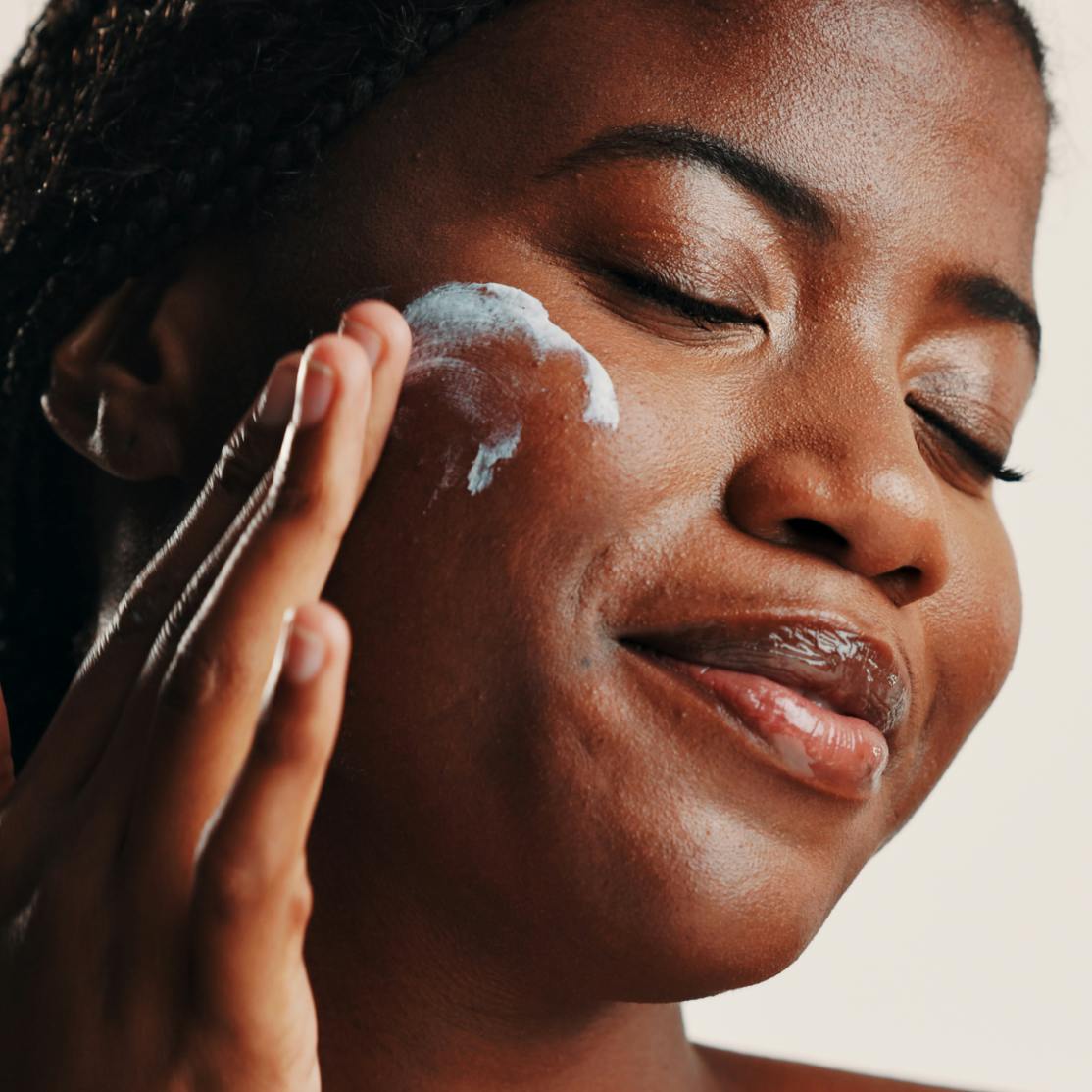


Peptides are the buzzworthy ingredients in so many new skin care products, but what are they and what do they do? Peptides in skin care are composed of amino acids, which are the building blocks of proteins. They act as messengers in the skin to prompt the production of proteins like collagen and elastin. Over time, these help soften wrinkles and keep your complexion firm and supple. A bonus of peptides is that they are safe and don’t irritate the skin, so a peptide product can be used every night. In fact, since peptides play so well with other active ingredients, a peptide-enriched moisturizer can be applied on top of a retinoid to double down on collagen-boosting benefits, and some products combine both ingredients in one formula.
What if there was a skin care ingredient clinically proven to promote collagen production and barrier repair that didn’t irritate the skin like other gold-standard active ingredients, such as retinol and vitamin C? Peptides are that powerful yet gentle ingredient, which is why they are such skin care superheroes.
Topical peptides in skin care act as messengers to stimulate production of collagen and elastin, the proteins that make up the structural support in the skin. Collagen is the dense Styrofoam-like filler that keeps your skin taut, and elastin is the springy connective tissue that holds foamy collagen in place, so everything can flex and move. Over time, collagen- and elastin-boosting peptides can help smooth fine lines and improve firmness and elasticity.
There are different types of peptides, and so many of them have long, unpronounceable names like acetyl hexapeptide-8 and palmitoyl oligopeptide. How do you keep all these various peptides straight, not to mention all the science-y names and numbers?
This guide will break down how these peptides work and help you choose the most effective peptide skin care product for you. Some peptides, for example, signal the skin cells to make more collagen, while other kinds of peptides help strengthen the skin barrier and promote wound-healing. One important tip: The peptides in a product (and many formulations include multiple types of peptides to maximize collagen-boosting benefits) should appear toward the top of the ingredients list.
Read on to learn everything you need to know about the benefits of peptides for the skin and the best way to use peptides on your face.
Peptides for Skin: What They Are and Why They’re in Skincare
Peptides are short chains of amino acids that serve as building blocks for proteins like collagen and elastin. Peptides in skin care (either synthetic or plant-derived from wheat or rice and then developed in a lab) are protein fragments that are able to signal skin cells to build more collagen and elastin.
The idea of applying topical peptides in a serum, lotion, or cream is like sending messengers into the skin to trigger repair and tell the fibroblast cells to get with it and produce more collagen. Like other important substances naturally produced in the body, such as moisturizing ceramides and hyaluronic acid (HA), natural peptides in skin diminish over time. That’s when topical synthetic peptides that have been linked to stimulating collagen production can come in to help replenish them.
To max out the collagen-boosting benefits, many skin care products add multiple peptides into a single formula. And because peptides are nonirritating for most skin types and play so well with other active ingredients, a lot of formulations pair them with actives like retinol or lactic acid, as well as hydrating HA to multitask benefits like collagen building, moisturizing, and barrier repair. A peptide-infused moisturizer can be applied on top of active ingredients like prescription tretinoin or vitamin C serum.
What Do Peptides Do for Skin? The Realistic Benefits
While peptides in skin care offer promising clinical backing as ingredients that can stimulate the production of collagen and elastin, they aren’t as well-researched as gold-standard ingredients like retinoids or topical vitamin C. The various types of peptides have been shown to help minimize lines and wrinkles (by building collagen), as well as supporting the skin barrier with antioxidant and anti-inflammatory properties. Plus, some types of peptides can help block the breakdown of collagen and elastin.
An important thing to remember about all these excellent skin care benefits is that—like all skin care products—optimal results depend on consistent use of the peptide product over time and realistic expectations. Let’s start by learning what the different kinds of peptides can do for your skin and how they work.
The 4 types of peptides in skin care
There are multiple types of peptides, and these protein precursors can each do different things for the skin, from promoting collagen and elastin production to helping repair and strengthen the skin barrier. One type of peptide helps reduce hyperpigmentation, while another may be able to mimic the line-softening effects of an injectable neuromodulator like Botox.
Here’s a breakdown of the four types of peptides and their benefits for the skin.
Signal peptides for firming and collagen-boosting
Common types: Palmitoyl pentapeptide-4 (known by the brand name Matrixyl), palmitoyl tripeptide, palmitoyl tetrapeptide, palmitoyl oligopeptide
These protein fragments act as messengers, communicating between cells and triggering the fibroblasts to make more collagen and elastin. This improves firmness, texture, and elasticity of the skin, as well as minimizes the appearance of fine lines and wrinkles over time.
Carrier peptides for barrier repair and skin healing
Most common type: Copper peptides (GHK-Cu)—a peptide bound to a copper ion
In addition to stimulating collagen production, carrier peptides transport minerals, like copper, to skin cells for wound healing and repair. Copper peptide has been shown to have antioxidant and anti-inflammatory properties that help defend the skin from toxic free radicals and environmental damage.
Neurotransmitter peptides for smoothing fine lines
Most common type: acetyl hexapeptide-8 (Argireline)
These synthetic peptides are designed to inhibit the release of a neurotransmitter that causes muscle contractions, mimicking the effects of injectable Botox. They have been studied for their ability to improve texture of the skin and soften lines and wrinkles, which is why this type of peptide in skin care is often called “Botox in a bottle.”
While a recent small study showed that the peptide Argireline in a hydrating HA serum had some line-reducing effects, the results were neither as immediate nor as effective as an injectable neuromodulator such as Botox, which works in a very different way than a topical skin care product. (When a purified form of botulinum toxin type A is injected directly into a facial muscle, it’s able to block the nerve receptors temporarily, paralyzing the ones that cause actions that reinforce wrinkles.)
Like all skin care ingredients, a topical neuropeptide may help smooth skin, but the wrinkle-relaxing results won’t be as dramatic as a cosmetic procedure.
Enzyme-inhibiting peptides for protecting collagen
Common types: carnosine, Matrixyl 3000 (a peptide complex of palmitoyl tripeptide-1 and the signal peptide palmitoyl tripeptide-7), trifluoroacetyl tripeptide-2, some rice and soy peptides
These peptides work by blocking the enzymes responsible for breaking down collagen and elastin. When combined with a signal peptide in a skin care formula, they can do double duty—triggering collagen and elastin production while inhibiting degradation of these proteins by enzymes such as matrix metalloproteinases. One peptide (oligopeptide-68) has been shown to block tyrosinase, the enzyme responsible for producing melanin, which helps reduce hyperpigmentation and brighten skin over time.
Benefits of Peptides for Skin in Midlife
The body’s natural production of collagen and elastin (not to mention HA and ceramides that hydrate your skin) all begin to diminish in midlife—especially at menopause, when estrogen levels precipitously drop. (The hormone estrogen is responsible for stimulating the production of collagen, elastin, HA, and ceramides.) But studies suggest that collagen and elastin begin to slowly decline as early as your mid-20s, so it’s never too early to be proactive about using collagen-boosting ingredients like peptides in your skin care routine.
Unlike active collagen-boosting ingredients such as retinoids and vitamin C, peptides are gentle and proven to be nonirritating for most skin types. For those with super sensitive skin who can’t tolerate a retinoid, peptides are a great plan B because they tend to be safe and gentle. While the collagen-building results (like firming and smoothing) aren’t as dramatic as tretinoin or vitamin C, peptides can be an effective supporting product to rev up your antiaging routine without causing irritation or inflammation.
Skin Care Success Stories
Peptide Skincare vs. Other Ingredients: What to Use Together (and What to Prioritize)
Peptides for the face can help deliver collagen-building benefits like smoother texture and firmer skin when used consistently over a span of months. They work to support a good skin care routine along with moisturizer to maintain the skin barrier and daily sunscreen to protect your skin from hyperpigmentation, skin cancers, and the breakdown of collagen and elastin that leads to wrinkles and sagging. Dermatologists stress that the most important antiaging product you can use is daily moisturizer with broad-spectrum sun protection of SPF 30 or more.
Peptides in skin care play well with other active ingredients without irritating the skin, so you can layer a peptide product over or under a retinol, a vitamin C serum, or a glycolic acid product without causing inflammation. (However, it is important not to apply a retinoid, a vitamin C serum, or any acid product at the same time. Layering these active ingredients together is a recipe for inflammation and irritation.) Because peptides work synergistically with other ingredients (like HA or retinol) they are often combined together in a skin care formulation to make it more effective for multitasking collagen-building, moisturizing, and barrier repair.
How to Use Peptides Safely and Get Better Results
While peptides in skin care are nonirritating for most skin types, even sensitive ones, it’s always a good idea to patch-test any skin care product to be on the safe side if you’re prone to irritation. And opt for a fragrance-free formulation if your skin tends to be reactive. In general, peptides for your face are gentle and easy to layer into your day and night skin care regimen.
How to use peptides in your skin care routine
Morning routine
Use a gentle cleanser (or simply rinse your face with water), apply a hydrating HA serum that contains peptides, then top with a daily moisturizer that has broad-spectrum sunscreen with an SPF of 30 or higher. Remember, SPF is a nonnegotiable must every single day, even cloudy ones.
Evening routine
After cleansing with a mild face wash, apply a retinoid product or an alpha hydroxy acid (AHA) lotion or an estrogen cream with estriol or an antioxidant like vitamin C. By the way: The “or” is important here! The key is to choose your active ingredient of choice and not bombard your skin in one night with all these things at once.
You can apply a peptide-enriched moisturizer on top of any active ingredient, however, because topical peptides won’t interact negatively with any of them and won’t irritate your skin. A peptide-enriched cream can also be a soothing one-and-done option on nights when you don’t use other active ingredients (but still want to stimulate some collagen production).
Peptides for Face: How to Choose a Product That’s Worth It
The best advice when it comes to peptides in skin care? Read the ingredients list and make sure that those peptide names and numbers (palmitoyl pentapeptide-4, acetyl hexapeptide-8 or Argireline, copper peptide, carnosine, or Matrixyl 3000) are nearer the top of the list, indicating higher potency.
Now, look at those peptide names and use this guide to choose the ones based on your main skin care goals. For example, if you want to soften crow’s feet and forehead lines, you can opt for a product that has acetyl hexapeptide-8 (Argireline), a neurotransmitter peptide that’s geared to block the neurotransmitter that causes muscle contractions. If your aim is to stimulate collagen and elastin production for firmer skin, then look for signal peptides (palmitoyl pentapeptide-4, palmitoyl tripeptide, palmitoyl tetrapeptide, palmitoyl oligopeptide). Remember that more than one peptide may be in a formula in order to increase clinically backed benefits.
Keep in mind that you don’t have to break the bank to buy a peptide-enriched product. You can find many effective drugstore options at a budget-friendly price. Again, do your research, read the ingredients list, and be skeptical of a formula that contains a proprietary complex or peptide technology but does not specify any exact peptide ingredients. (A good rule of thumb when reading an ingredients list: You want to see the word “peptide,” often followed by a number, as opposed to something vague like “plant peptide” or “collagen peptides” or “hydrolyzed collagen.”)
Also, know that peptides are different from collagen in a product. Because collagen is a very large molecule, it is unable to penetrate into the deep layers of the skin where the collagen-making fibroblast cells are, while peptides (tiny fragments of proteins) are small enough to absorb beyond the surface.
Common Mistakes That Make Peptides Feel Like They ‘Don’t Work’
Topical peptides for the face can deliver collagen-building benefits like smoother texture and firmer skin, similar to an active ingredient like prescription-strength tretinoin, but they need to be used consistently over a span of months before they can deliver firming results—and those visible results may still be subtle. Other ingredients can have more immediate effects:
- Retinoids like tretinoin and over-the-counter retinol not only stimulate collagen and elastin production, but also regulate skin cell turnover so that you see visible smoothness, brightness, pore-tightening, and acne-clearing after a few weeks of consistent use.
- AHAs, including glycolic acid, are proven to boost collagen deep in the dermis of the skin, but also chemically exfoliate the surface so that you can see results immediately.
- Topical vitamin C, also shown to help boost collagen production, is primarily known for its antioxidant and skin-brightening properties.
Peptides, on the other hand, work on the DL, with results that aren’t as dramatic, so we tend to discount their proven skin care benefits. And because peptides don’t cause redness, peeling, or irritation, we think they aren’t working, which isn’t the case. Remember, the results take time and will be subtle, and consistency is the secret to success.
When to Talk With a Clinician or Dermatologist
If you experience irritation, redness, acne, a rash, or stinging after starting to use a new product, and if that inflammation doesn’t improve after stopping use of the product, it’s a good idea to see a your Midi clinician or a dermatologist. It’s also a good idea to check in with your prescribing clinician if your skin symptoms during midlife (perimenopause or menopause), whether hormonal acne or extreme dryness, are not being improved by your skin care routine.
A prescription-strength oral or topical medication might be the answer. You can also talk with your clinician about hormone therapy, which can be a game changer for treating many perimenopause symptoms, including dry skin. There are also many options for cosmetic procedures that can go even further to build collagen and help firm sagging skin and wrinkles on the face and neck, which can be discussed with your clinician.
Key Takeaways
- Peptides in skin care are synthetically created fragments of proteins that are biosimilar to the naturally occurring peptides in our body. These chains of amino acids are precursors of proteins like collagen and elastin, and they are able to stimulate skin cells to produce more of those all-important proteins.
- Peptides not only stimulate collagen and elastin production to help firm the skin and soften fine lines, but they also help strengthen the protective skin barrier with their wound-healing, antioxidant, and anti-inflammatory properties.
- There are 4 main types of peptides: signal peptides that prompt collagen and elastin formation, carrier peptides that are bound to a trace mineral like antioxidant-rich copper, which helps support the skin barrier, neurotransmitter peptides (known as “Botox in a bottle” for muscle-relaxing claims), and enzyme inhibiting peptides that block enzymes that cause collagen degradation.
- Peptides as a skin care ingredient are gentle and nonirritating for most skin types, and they play well with other ingredients in a skin care formula, like hydrating HA or active ingredients such as retinol or vitamin C. Peptide-enriched skin care can also be layered over or under these active ingredients without causing irritation.
Frequently Asked Questions (FAQs)
What do peptides do for your skin?
Peptides are chains of amino acids—the building blocks of proteins—that can act as messengers in the skin to trigger the production of proteins like collagen and elastin. Over time, this helps support the skin barrier, softens wrinkles, and keeps the skin firm and supple.
What is the best peptide for skin?
There are multiple types of peptides, and these protein precursors can do different things for the skin, from promoting collagen and elastin production to helping repair and strengthen the skin barrier. For example, signal peptides like palmitoyl pentapeptide-4 have a direct line to the fibroblast cells that make collagen and elastin. The key is to look for the word “peptide,” followed by a number near the top of an ingredients list in order to make sure that the formula includes them.
What should you not mix peptides with?
One of the big bonuses with peptides for skin is that they work alongside other ingredients, such as hydrators (HA and ceramides) and potentially irritating active ingredients like retinoids, vitamin C, and even glycolic acid. While these actives should not be applied at the same time, a peptide-enriched serum or cream can be layered under or over one of them to boost the collagen-building benefits.
Are peptides better than retinol?
They work hand in hand, and the good news is that you can use them together to double down on collagen production. These two ingredients work to stimulate collagen synthesis, but they do it in different ways—and they do other jobs too. While retinol and prescription retinoids like tretinoin trigger fibroblasts to make more collagen and elastin, they also promote skin cell turnover, which helps to brighten skin, fade hyperpigmentation, and unclog pores to reduce acne breakouts.
What are the top 5 peptides?
There are four main types of peptides, and a safe bet is to look for one or more of these on an ingredients list (near the top). Signal peptides for firming and line reduction (like palmitoyl pentapeptide-4 or palmitoyl tetrapeptide), carrier peptides for skin barrier repair (these are copper peptides), neurotransmitter peptides like acetyl hexapeptide-8 (Argireline) that may smooth fine lines, and enzyme-inhibiting peptides such as carnosine or Matrixyl 3000 that block the enzymes that degrade collagen.
If you’re in perimenopause or menopause and want guidance from clinicians who specialize in women’s midlife health, book a virtual visit with Midi today.
Hormonal change is at the root of dozens of symptoms women experience in the years before and after their period stops.
Our trained menopause specialists can help you connect the dots to guide you towards safe, effective solutions.
Whether you need personalized guidance or a prescription routine to tackle symptoms—including brain fog, hot flashes, sleep trouble, mood swings, and weight gain—we’ve got you covered. Learn more here.
Midi’s mission is to revolutionize healthcare for women at midlife, wherever they live and whatever their health story. We believe that starts with education, to help all of us understand our always-changing bodies and health needs. Our core values guide everything we do, including standards that ensure the quality and trustworthiness of our content and editorial processes. We’re committed to providing information that is up-to-date, accurate, and relies on evidence-based research and peer-reviewed journals. For more details on our editorial process, see here.