



The best menopause clinics are those that have menopause-trained clinicians, create individualized treatment plans featuring evidence-based options, and offer follow-up that adjusts as your needs change.
We encourage looking for clinics that offer a visit type (in-person, virtual, or hybrid) that works best for you; insurance or HSA/FSA support when available; and whole-person care that includes sleep, mood, sexual health, bone health, and heart health.
Midi Health is one option for women seeking clinician-led, virtual menopause care that involves a practical, personalized approach.
What Are the Best Menopause Clinics for Personalized Care?
You can determine the “best” menopause clinic based on its qualifications, its approach to care, and whether it’s a good fit for you. You are what matters here.
Evaluate your perimenopause or menopause goals, medical history, individual health risks, and treatment preferences.
Also consider which approach to care works best for you: Can you go in person to appointments, or is it easier and more accessible to set up virtual visits?
What to Look For in Menopause Specialists and HRT Specialists
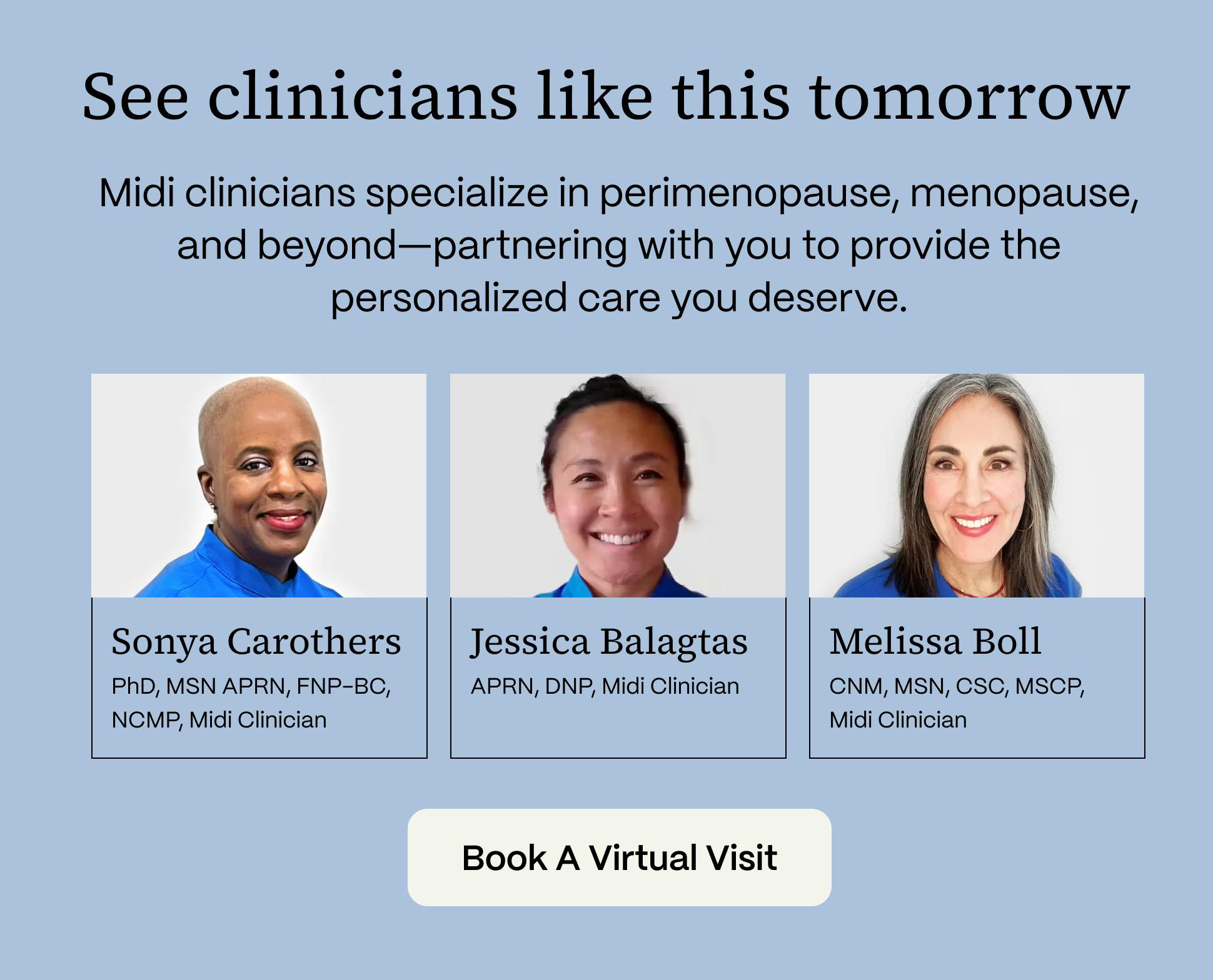
We recommend finding a physician who is trained in menopause. Midi clinicians, for example, are women’s health experts who participate in an ongoing education program on menopause. You can also search for healthcare professionals through an organization like The Menopause Society.
A menopause specialist should feel comfortable with:
- recommending hormonal and/or non-hormonal treatment options
- treating your full picture of symptoms, from hot flashes and sleep challenges to mood shifts and vaginal dryness
- providing regular follow-ups for treatment adjustment
- communicating with primary care, gynecology, or other specialists when needed
- referring you for testing, imaging, or other preventive care when needed
True Stories Of Transformation
How to Find a Women’s Midlife Specialist or Doctor Specializing in Menopause
Here’s how you can get your search started:
- Ask yourself two key questions: What are your symptoms, and what are your treatment goals? (It’s helpful to write your answers down.) These answers can help guide your search—ensure your clinician can help find the solutions you're looking for.
- Search for menopause-certified clinicians. (You can book a virtual Midi visit to get care from with menopause-trained clincians. You can also use the Menopause Society’s Find a Menopause Practitioner tool to search for a healthcare professional.)
- Verify your insurance benefits, pharmacy access, and visit availability.
- Ask whether the clinic offers (and recommends) ongoing care versus one-time consults.
- Book your visit. Write down a few questions you’d like to ask your clinician so you’re prepared.
How to Compare Menopause Clinics
How Menopause Clinics Address Symptoms, Diagnosis, and Testing
Perimenopause isn’t diagnosed via a single blood test because hormone levels are constantly fluctuating during these years. A qualified menopause clinic will talk with you about your age, menstrual history, and symptoms before evaluating menopause status and recommending treatment.
A clinician or doctor specializing in menopause should also consider underlying causes of your symptoms, medications, health risk factors, and family history. Preventive care and screening remain important in midlife.
Depending on your symptoms, preferences, and goals, the following treatment options may be right for you:
- hormone replacement therapy (HRT, now commonly referred to as menopause hormone therapy, or MHT)
- non-hormonal prescriptions
- targeted lifestyle and behavior changes
- sleep, mood, and sexual health support
When Virtual Menopause Clinics May Be the Best Fit
In a study published in Mayo Clinic Proceedings, 84% of women did not seek care for menopause-related symptoms, with a significant percentage saying they were too busy or even embarrassed to do so. A virtual menopause clinic can solve for those barriers—and more.
Virtual visits are convenient, more comfortable, and allow for frequent check-ins, especially for women with busy schedules, caregiving responsibilities, frequent travel, or limited access to local in-person specialists.
Virtual visits should also coordinate seamlessly with in-person care when you need it. Physical exams and routine screenings like Paps and mammograms are an important part of your overall care, and the best menopause clinics should work with you to make sure you stay current on those. When bloodwork or imaging is needed, your clinician can order it during your virtual visit and direct you to a local facility for completion.
Red Flags to Watch for When Comparing Menopause Clinics
During the evaluation, watch for these red flags:
- dismissive attitude or conversations that don't take your symptoms seriously
- one-size-fits-all treatment
- unclear clinician credentials
- lack of discussion about safety, contraindications, or treatment alternatives
If you experience any of these, you may want to find another menopause clinic.
Tips for Talking With Your Healthcare Professional
It can be difficult to remember everything when you get to your visit. Bring a symptom timeline and record of your treatment history. Talk with your clinician about goals and expectations. Open up about concerns that you otherwise might be hesitant to discuss, such as sexual symptoms.
With so many options for treatment across many different categories, you can find a menopause clinic that fits with your preferences, concerns, and contraindications. Ask how clinicians handle treatment follow-up, reporting of symptom change and severity, and deciding what treatment success looks like.
Finally, remember this is about your whole health. Talk about how both you and the clinician envision menopause care fitting into your primary and preventive care, and how they make that partnership a priority.
Frequently Asked Questions (FAQs)
Are HRT specialists different from regular ob-gyn or primary care clinicians?
They may be—or they may be the same person. Ob-gyns or primary care clinicians can be menopause specialists.
Can a virtual menopause clinic be as good as an in-person clinic?
Yes, virtual menopause clinics cater to busy schedules, caregiving responsibilities, travel, or limited access to local specialists. This can bring faster access to menopause-informed care.
What questions should I ask before choosing a menopause clinic?
Ask the menopause clinic about their experts and what training they’ve received to make them specialists in menopause. Ask about their approach to care, which treatments they provide, and what ongoing support looks like. Finally, talk about insurance coverage and cost. A good clinic will be knowledgeable and transparent about all questions.
Does every woman with menopause symptoms need hormone therapy?
No. Hormone therapy is effective for a range of menopausal symptoms, but it’s not the answer to all symptoms. Plus, hormone therpay is not right for every woman. Non-hormonal prescriptions, supplements and botanicals, and lifestyle coaching are all important components of a treatment plan, too.
Is Midi one of the best sources for menopause care?
Yes. Midi has a wealth of intensively trained menopause experts who are board-certified licensed nurse practitioners, nurse midwives, doctors, and naturopathic doctors who specialize in women’s midlife health. With Midi, you’ll get personalized treatment for perimenopause and menopause, as well as preventive care.
If you’re in perimenopause or menopause and want guidance from clinicians who specialize in women’s midlife health, book a virtual visit with Midi today.
Hormonal change is at the root of dozens of symptoms women experience in the years before and after their period stops.
Our trained menopause specialists can help you connect the dots to guide you towards safe, effective solutions.
Whether you need personalized guidance or a prescription routine to tackle symptoms—including brain fog, hot flashes, sleep trouble, mood swings, and weight gain—we’ve got you covered. Learn more here.
Midi’s mission is to revolutionize healthcare for women at midlife, wherever they live and whatever their health story. We believe that starts with education, to help all of us understand our always-changing bodies and health needs. Our core values guide everything we do, including standards that ensure the quality and trustworthiness of our content and editorial processes. We’re committed to providing information that is up-to-date, accurate, and relies on evidence-based research and peer-reviewed journals. For more details on our editorial process, see here.