
If you’re trying to find a solution to hair thinning or loss during midlife, there’s a good chance you’ve heard of minoxidil for women. As the only FDA-approved medication for female pattern hair loss, topical minoxidil has been shown to be a safe and effective way to promote hair growth and improve thickness.
But you still may have questions: Which minoxidil option is right for you? What are the potential side effects? When will you start seeing results? Keep reading to learn more, and know that Midi Health clinicians can help you figure out why you’re experiencing hair loss; whether oral or topical minoxidil is right for you; and what your best options are for regrowing thicker, fuller hair.
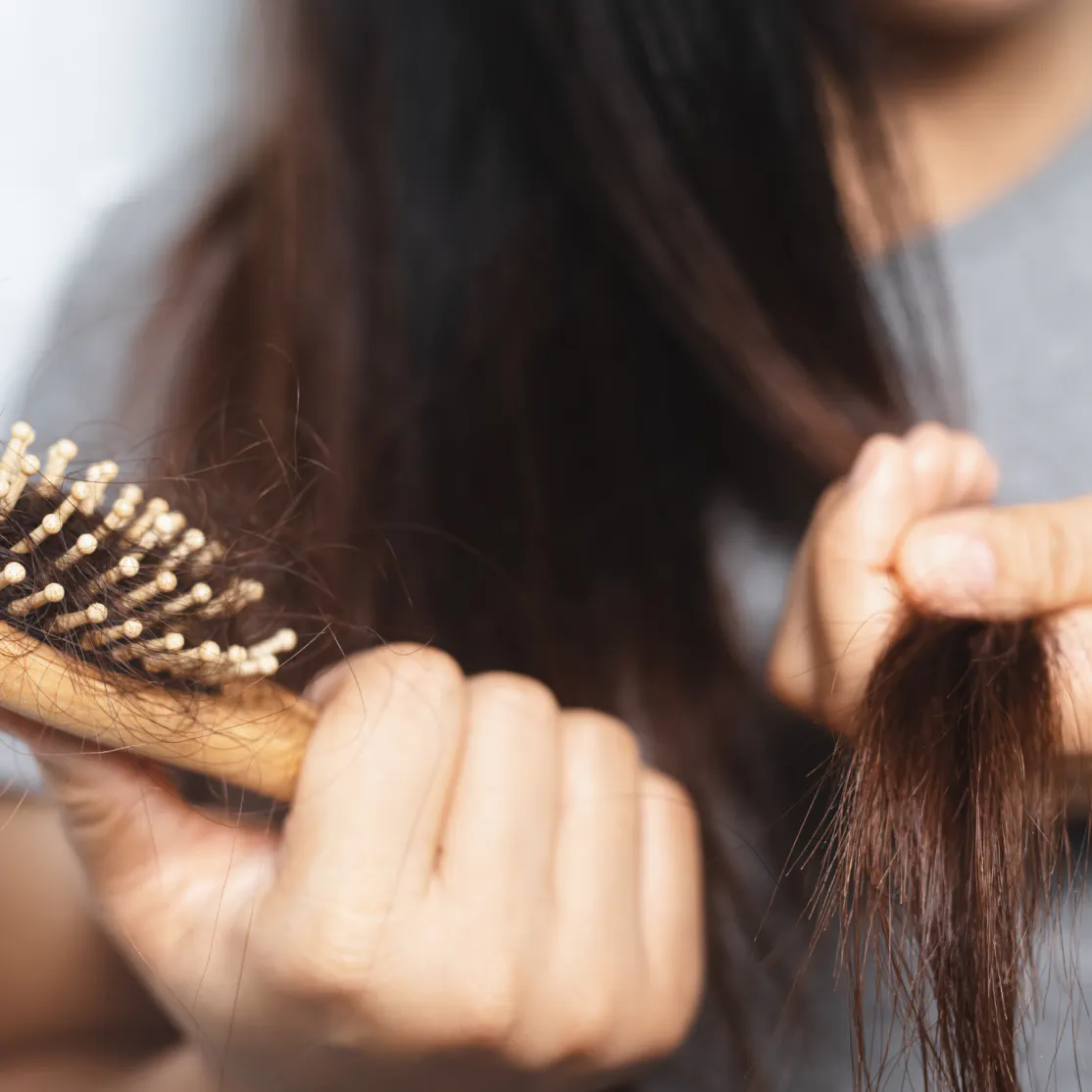
Noticing more hair in your shower drain or on your hairbrush lately? You’re probably not imagining it. Hair loss and thinning are common in midlife. In one study, more than half of postmenopausal women had female pattern hair loss (FPHL). But you don’t have to just live with it: Minoxidil for women is the only FDA-approved topical treatment for FPHL, and it’s often the first treatment that clinicians recommend.
Losing your hair can be stressful enough without having to sort through a confusing list of treatment options. For example, should you choose oral or topical minoxidil? And if you opt for an over-the-counter (OTC) topical treatment, is the 2% solution or 5% foam better?
Below, we’ll break down the differences between topical and oral minoxidil to help you figure out which might work best for you. We'll also cover how minoxidil works, what results you can expect (and when), and who might want to avoid it altogether.
Minoxidil can be a safe and effective way to treat hair loss, but it's best to talk with a clinician before starting treatment, especially if you're considering the oral form. A Midi clinician can help you find the right treatment to get a handle on hair thinning.
Why Does Hair Thin During Perimenopause and Menopause?
FPHL is one of the most common causes of hair thinning in women, and it becomes more common with age. According to some estimates, it affects about 25% of women by age 50 and more than half of women by their late 70s.
Hormonal changes during perimenopause and menopause play a part. Estrogen helps regulate the hair growth cycle, so as estrogen levels decline, hair may spend less time growing and get thinner. Lower estrogen levels may also make hair follicles more sensitive to androgens (hormones like testosterone). For example, one androgen called dihydrotestosterone can make hair follicles shrink, resulting in finer, shorter hairs over time.
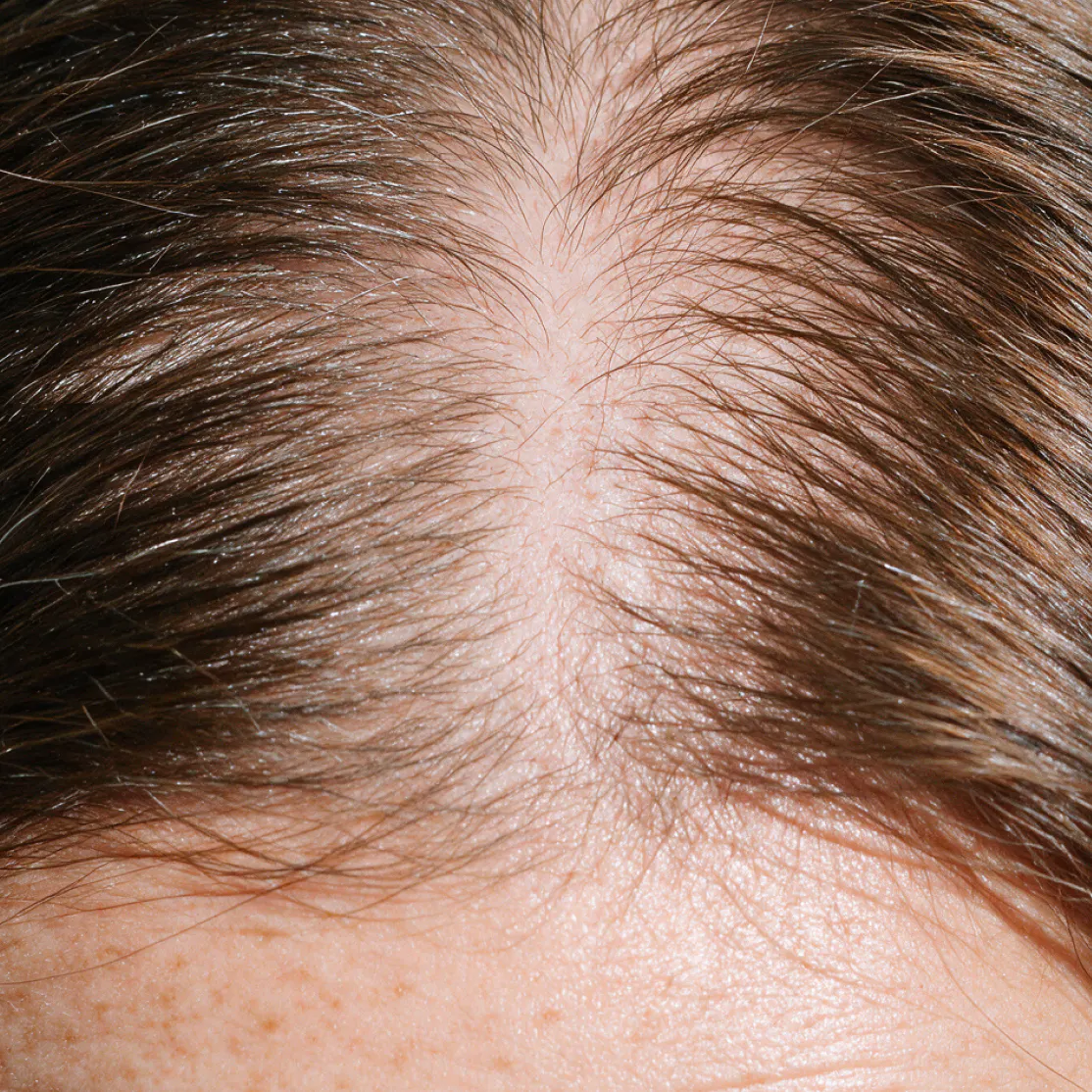
With FPHL, hair thinning typically develops along your part and across the top of your head, while your front hairline stays mostly intact. So, you might notice a widening part or a thinner ponytail.
Of course, hormones and FPHL aren't the only possible culprits. Stress, illness, or rapid weight loss can trigger telogen effluvium, a temporary form of excessive hair shedding. Other issues, such as iron deficiency or thyroid problems, can also contribute to hair thinning or loss.
If you’re trying to treat hair loss, narrowing down the cause is essential. There isn't a one-size-fits-all solution to menopause hair thinning. Minoxidil can help with FPHL, but other causes, such as low iron or thyroid problems, need different treatment. A healthcare professional, like a Midi clinician, can help you figure out what's behind your hair changes and how best to manage them.

How Does Minoxidil Work for Women?
Minoxidil is used to treat female- and male-pattern hair loss. But here's something you might not know: It was originally a high blood pressure medication. When researchers noticed it also caused hair growth, they developed a topical version for hair loss. Today, minoxidil for women is available in both topical and oral forms.
It works, in part, by widening blood vessels around hair follicles, which may improve blood flow and help deliver nutrients to the follicles. It also helps hair stay in its growth phase longer and spend less time in its resting phase, allowing follicles to produce thicker, longer hairs.
Research shows that minoxidil can help slow hair loss and improve hair growth and thickness in women with FPHL. In fact, topical minoxidil is the first-choice treatment for FPHL, with more evidence behind it than other options. Results vary, though, and minoxidil works best when used consistently over time. It’s important to note that it doesn't create new hair follicles, and hair thinning can return if you stop using it.
Topical Minoxidil for Women: 2% Solution vs. 5% Foam
Topical minoxidil for women is available OTC in two strengths: a 2% solution used twice daily and a 5% foam applied once daily.
You might notice that some 5% minoxidil products are labeled for men, which can make things a little confusing. But the 2% solution and 5% foam contain the same active ingredient and are FDA approved for women. And research has shown that both versions can help promote hair growth and density in women.
So, is one better than the other? Not necessarily. A larger clinical trial found that both options improved hair growth, with nearly identical increases in hair count after 6 months.
The 5% foam does have a couple of practical advantages: You need to apply it only once per day, and it may be less likely to cause scalp irritation because it doesn't contain propylene glycol, an ingredient found in many liquid solutions. The 2% solution is still an effective option, though, especially if you prefer a liquid formula.
Whichever option you choose, apply minoxidil directly to the areas of your scalp where your hair is thinning, making sure your hair and scalp are dry. Let it dry completely before styling your hair or going to bed, and follow the product instructions for how much to use. Consistency is key, so try to use it every day as directed.
Rogaine isn’t the only form of minoxidil available. The Midi Custom Rx Hair Regrowth Serum is a compounded topical formula that combines minoxidil with other active ingredients to target hair loss and promote hair growth.
Low-Dose Oral Minoxidil: When Is a Pill the Better Option?
Unlike topical minoxidil, oral minoxidil isn't officially designed for hair loss, but clinicians may prescribe it to help with hair shedding and thinning, and research shows it can be an effective option for women with FPHL. A review reported improvements in 61% to 86% of people taking low-dose oral minoxidil across studies, although results varied depending on the dose and type of hair loss.
Both forms can stimulate hair growth, but minoxidil pills for women offer an alternative to topical treatments. Low-dose oral minoxidil may be a good option if topical treatments irritate your scalp, leave your hair feeling sticky or weighed down, or are simply hard to keep up with. It may also be an option if you haven't seen enough improvement with topical minoxidil.
For women with FPHL, oral minoxidil is usually prescribed in low doses, often ranging from 0.25 to 2.5 milligrams (mg) daily. Some clinicians start with a lower dose and adjust it based on how well the treatment works and whether you have any side effects. Higher doses may improve hair growth for some women, but they can also increase the risk of side effects, like unwanted facial hair, swelling, and changes in blood pressure or heart rate. That's why it's important to work with a clinician to find the lowest effective dose, rather than adjusting it yourself.
Topical vs. Oral Minoxidil: Which Should You Choose?
Deciding between oral or topical minoxidil? Both can help with hair growth, but each has its pros and cons. Since minoxidil needs to be used consistently to maintain results, the best option is one you can stick with and tolerate well. Some women also use both forms under a clinician's guidance.
Here's how the two forms compare:
What to Expect: The Shedding Phase and Results Timeline
Minoxidil for women doesn't work overnight. In fact, you may notice more hair shedding when you first start treatment. Minoxidil helps move hair follicles from the resting phase into the growth phase, which can cause older hairs to fall out sooner as new hairs begin growing.
One small study found that initial hair shedding lasted longer with the 2% solution than with the 5% solution. For those using the 5% solution, more shedding was also linked to greater improvements in hair density. But that group included only men, so it's unclear whether the findings apply to women.
While initial shedding can feel discouraging, it doesn't mean something is wrong. It may be a sign that minoxidil is working, but shedding isn't necessary for results.
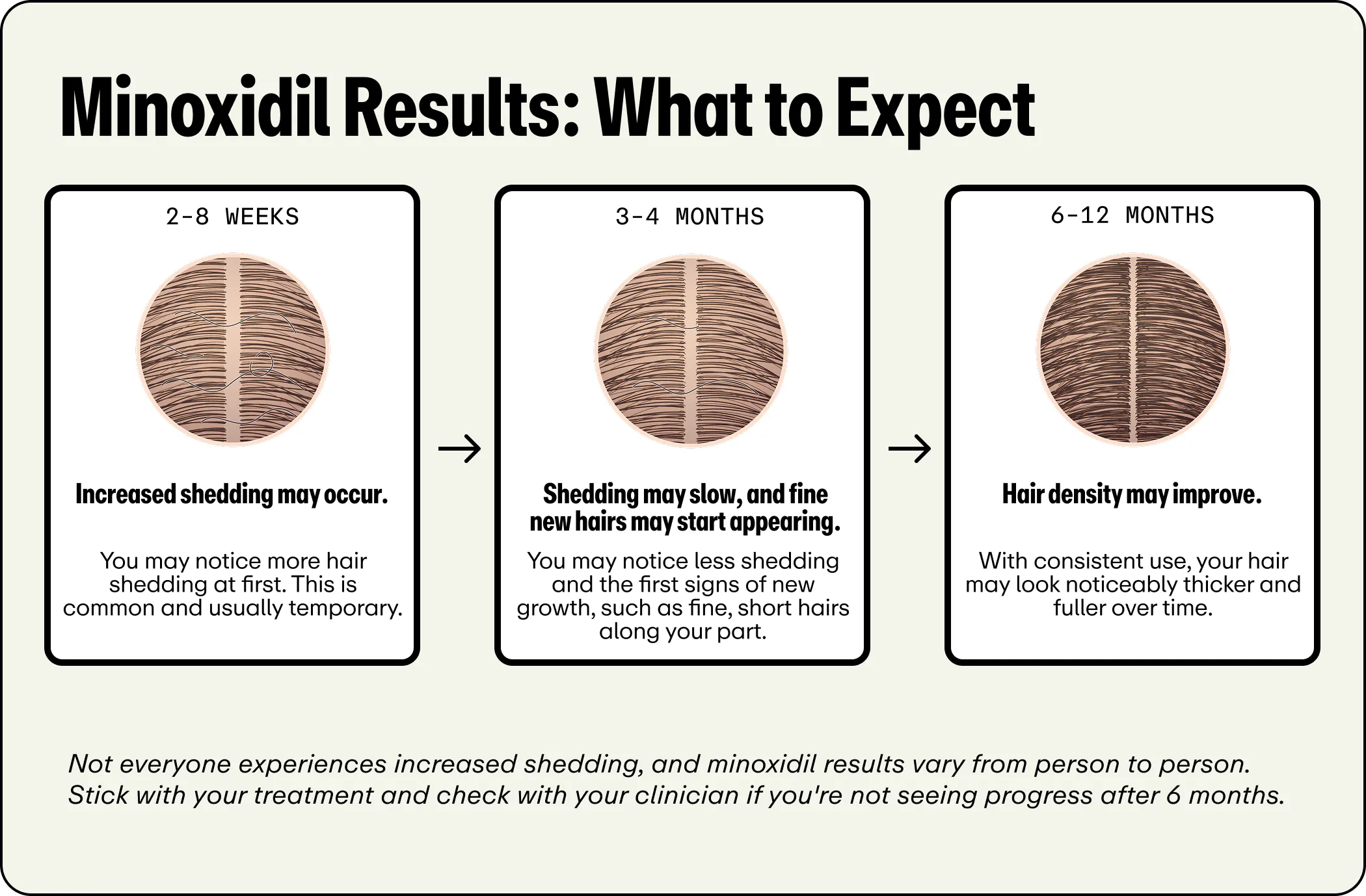
Whether you're using oral or topical minoxidil, improvements may be noticeable within 3 to 6 months, although it can take 6 to 12 months to see how well treatment is working. Here's a general idea of what to expect:
- 2 to 8 weeks: Temporary increased shedding may occur.
- 3 to 4 months: Shedding may slow, and fine new hairs may start appearing.
- 6 to 12 months: New hairs may thicken, with more noticeable improvements in hair density and coverage.
If you haven't noticed any changes after 6 months of consistent use, talk with your clinician about whether to continue treatment or investigate other causes of hair loss. Taking monthly photos in similar lighting can help you track gradual changes over time.
Keep in mind that minoxidil can be used as a long-term treatment, but it isn’t a cure-all for FPHL. Some women may notice fewer improvements over time, and stopping it can cause you to gradually lose the hair you've regrown.
Minoxidil Side Effects Women Should Know About
There are some minoxidil side effects that women should know about before starting treatment. The risks differ depending on whether you use the topical or oral form:
- Topical minoxidil: Possible side effects include scalp irritation, dryness, itching, or flaking; changes in hair texture; and a greasy or sticky residue. Unwanted facial hair growth (hypertrichosis) can also occur, especially if the product accidentally transfers onto your face. Dizziness and heart palpitations are rare.
- Oral minoxidil: The most common side effect is unwanted facial or body hair growth. Other possible effects include fluid retention and ankle swelling, headaches, lightheadedness from lower blood pressure, and a faster heart rate.
With either form, higher strengths or doses may increase the risk of certain side effects, especially unwanted facial or body hair growth.
You can reduce your risk of side effects, though. If you're using topical minoxidil, wash your hands after applying it, keep it off your face and neck, and use only the recommended amount. For oral minoxidil, your clinician can start you on a low dose and monitor you for side effects. Don't adjust your dose without their guidance.
Most side effects aren't serious, but some symptoms need prompt attention. Contact your clinician if you develop swelling, dizziness, or a racing heartbeat. Seek immediate medical care if you experience chest pain, shortness of breath, or fainting.
Who Should Not Use Minoxidil?
Minoxidil is generally well-tolerated, but it isn't suitable for everyone. Some people should avoid it, while others may need extra precautions.
Whether minoxidil is right for you depends on a few factors:
- Pregnancy or breastfeeding: Avoid both topical and oral minoxidil.
- Scalp conditions or allergies: Topical minoxidil isn't recommended if you're allergic to ingredients in the formula or if your scalp is irritated or infected, or if it has cuts or open sores.
- Sudden or patchy hair loss: See a clinician to identify the cause before starting minoxidil.
- Certain medical conditions: Oral minoxidil requires extra caution if you have heart disease, low blood pressure, kidney problems, or a history of fluid retention. People with pheochromocytoma shouldn't take it.
Oral minoxidil can also interact with medications that affect blood pressure, including some diuretics. That's why it's important to work with a clinician before starting treatment, especially if you take other medications or have preexisting conditions. Your clinician may check your blood pressure, heart rate, and kidney function before prescribing it.
Combining Minoxidil With Spironolactone and Other Treatments
A clinician may recommend minoxidil with spironolactone, a prescription diuretic also used off-label to treat hair loss in women. The treatments target hair loss in different ways: Minoxidil helps stimulate hair growth, while spironolactone blocks the effects of androgens (hormones like testosterone) on hair follicles to help prevent thinning.
Some research suggests that combining the two may improve hair growth. One study of 100 women found that combining low-dose oral minoxidil with spironolactone reduced hair loss and shedding over 12 months, with generally mild side effects. Another study found that combining topical minoxidil with spironolactone improved hair growth, with better results than minoxidil and finasteride on some measures. But more research is needed to determine which combinations work best.
It's also important to address any underlying issues contributing to your hair loss. For example, hormone replacement therapy (HRT, now commonly referred to as menopause hormone therapy, or MHT) may support healthy hair by addressing declining estrogen levels, although it isn't a proven treatment for hair loss on its own. Correcting nutritional deficiencies, such as low iron, may also help. Treating thyroid problems and getting enough protein can make a difference, too.
Your clinician may also discuss combining minoxidil with microneedling, which was among the most effective treatment combinations for FPHL in a 2025 review. Other options include ketoconazole (an antifungal) shampoo, platelet-rich plasma, or low-level laser therapy, although evidence varies.
How to Get Minoxidil for Women Through Midi
Topical minoxidil is available OTC, while oral minoxidil and spironolactone require a prescription. If you're considering treatment for hair loss, a Midi clinician trained in midlife health can help you figure out which option is right for you.
During a virtual visit, your clinician will review your symptoms and health history, including any changes you may be experiencing during perimenopause or menopause. They may recommend blood tests to check your iron stores (ferritin) or thyroid function.
From there, they'll work with you to develop a personalized treatment plan that may include oral or topical minoxidil, spironolactone, or hormone therapy, depending on your needs.
Midi accepts many insurance plans, so you can book a visit to get personalized care for hair loss and ongoing support to manage side effects and fine-tune your treatment plan.
Key Takeaways
- Declining estrogen levels during perimenopause and menopause can contribute to female pattern hair loss (FPHL), a common cause of thinning hair in midlife.
- Minoxidil for women may help stimulate hair growth and improve thickness.
- Topical minoxidil, which is the only FDA-approved treatment for FPHL, is available OTC as a 2% solution or 5% foam. Both can help promote hair growth, but the foam may be gentler on your scalp and only needs to be applied once a day.
- Prescription oral minoxidil may be a good option if topical treatments irritate your scalp or are hard to keep up with. But it can cause body-wide side effects like unwanted facial hair growth and swelling.
- You may notice extra shedding when you first start minoxidil, but improvements can begin within 3 to 6 months, with fuller results taking 6 to 12 months.
- You can combine minoxidil with other hair loss treatments, like spironolactone or microneedling, but what works best depends on the cause of your hair loss. A clinician can help you find the right approach.
Frequently Asked Questions (FAQs)
Does minoxidil actually work on women?
Yes. Studies show that minoxidil can help slow hair loss and promote thicker, fuller hair in women with female pattern hair loss. While it doesn’t work for everyone, it is generally well-tolerated and can be effective with consistent use.
Does minoxidil cause weight gain?
Weight gain isn't a common side effect of topical minoxidil. However, oral minoxidil can cause fluid retention, which may lead to swelling, bloating, and weight gain.
Why can't women use men’s minoxidil?
Some people refer to 5% topical minoxidil as men’s minoxidil, but women can use 5% minoxidil, too. The active ingredient is the same, and both the 2% solution and 5% foam are FDA approved to treat hair loss in women.
What happens when you stop using minoxidil?
Minoxidil is not a cure for hair loss and works only as long as you keep using it. When you stop treatment, you may gradually lose the hair you've regrown, and thinning can return.
Is minoxidil safe for pregnant or breastfeeding women?
Minoxidil is not recommended while you’re pregnant or breastfeeding. Animal studies suggest it may pose risks to a developing baby, and the medication can also pass into breast milk. It's best to avoid both topical and oral minoxidil during this time.
If you’re in perimenopause or menopause and want guidance from clinicians who specialize in women’s midlife health, book a virtual visit with Midi today.
Hormonal change is at the root of dozens of symptoms women experience in the years before and after their period stops.
Our trained menopause specialists can help you connect the dots to guide you towards safe, effective solutions.
Whether you need personalized guidance or a prescription routine to tackle symptoms—including brain fog, hot flashes, sleep trouble, mood swings, and weight gain—we’ve got you covered. Learn more here.
Midi’s mission is to revolutionize healthcare for women at midlife, wherever they live and whatever their health story. We believe that starts with education, to help all of us understand our always-changing bodies and health needs. Our core values guide everything we do, including standards that ensure the quality and trustworthiness of our content and editorial processes. We’re committed to providing information that is up-to-date, accurate, and relies on evidence-based research and peer-reviewed journals. For more details on our editorial process, see here.