

That persistent ringing, buzzing, or humming in your ears? It can be frustrating, distracting, and confusing, especially if it starts around the same time as other perimenopause changes. Tinnitus happens when you hear sounds that don’t come from an outside source. And while hormone shifts during the menopause transition may play a role for some women, they’re rarely the only factor behind tinnitus. The good news is that you don’t have to guess what’s causing your symptoms. Here’s what experts know about the link between tinnitus and menopause, why ear ringing can flare in midlife, what else may be causing it, and what you can do about it.
Menopause can bring a host of symptoms. Hot flashes? Sure. Mood changes? Probably. Ringing in your ears? You might not expect that one.
Tinnitus refers to hearing ringing, buzzing, hissing, or other sounds without an outside noise source. It’s surprisingly common, affecting an estimated 14% of adults worldwide. While tinnitus can happen to anyone, some women first notice it during perimenopause or menopause. If that sounds familiar, you may be wondering: Can menopause cause tinnitus?
It’s a tricky question, as tinnitus is a symptom that can happen for many reasons. Hormone shifts during the menopausal transition may contribute to tinnitus, but they rarely tell the whole story. Hearing loss, noise exposure, and other factors can also play a role.
Let’s take a closer look at the potential link between tinnitus and menopause, what else may trigger ear ringing in midlife, and how the right evaluation can help guide your next steps.
Tinnitus and Menopause: Can Menopause Cause Tinnitus?
The short answer is maybe—it’s a little complicated. Researchers are still trying to understand the relationship between tinnitus and menopause. While evidence suggests there may be a link, it’s not clear whether menopause directly causes or contributes to tinnitus.
Here’s what we know so far. Research suggests that hormonal changes during the menopause transition may affect how the inner ear and brain process sound. That could help explain why some women notice new or worsening tinnitus during perimenopause and menopause.
The potential link between hormones and tinnitus isn’t limited to menopause, though. In one study, women with irregular menstrual cycles were more likely to report tinnitus—with longer irregularities linked to more severe symptoms—than women with regular cycles. While that doesn’t prove a direct connection, it adds to growing evidence that hormonal changes might play a role in tinnitus.
So menopause is likely just one piece of the puzzle, rather than the sole cause of tinnitus. Symptom timing can offer clues. For example, if ringing in the ears starts around the same time as irregular periods, hot flashes, or other menopause symptoms, hormonal changes might be a factor.
But timing alone isn’t enough to determine what’s causing tinnitus. Two things may occur at the same time, but that doesn't mean that they're necessarily related. That's why it’s important to consider the bigger picture.
What Tinnitus Can Sound and Feel Like in Midlife
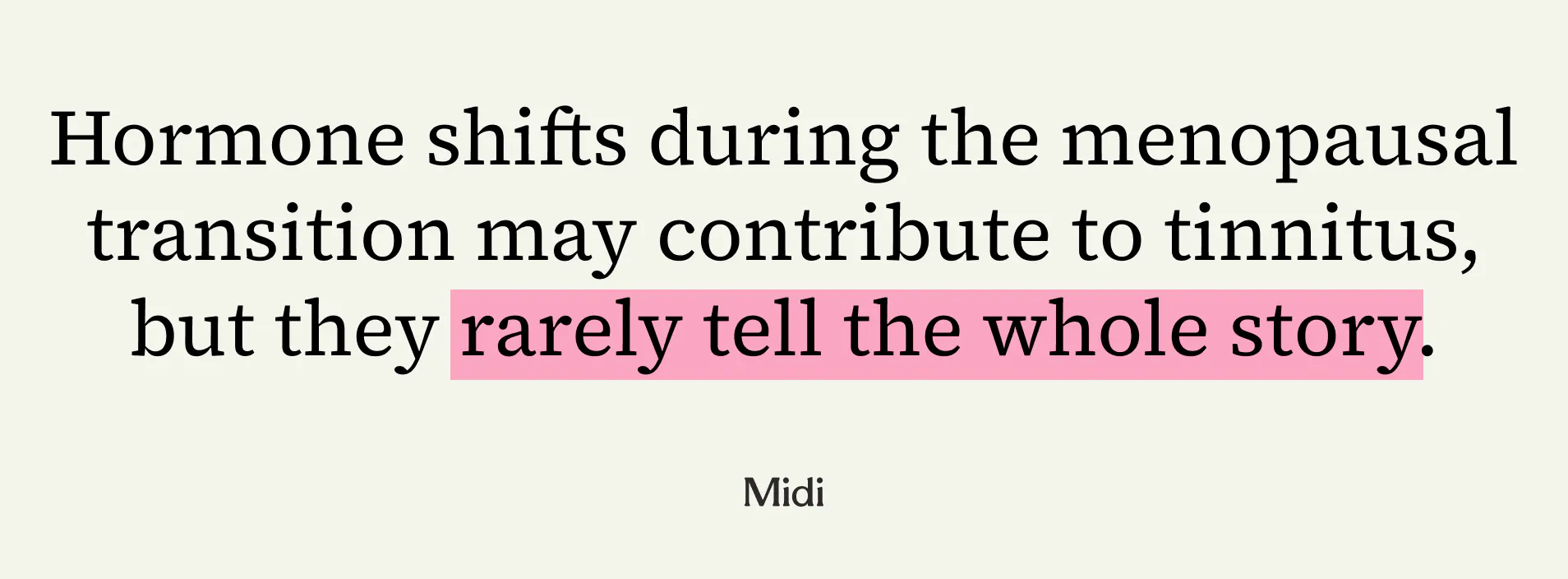
Tinnitus is usually described as ringing in the ears, but it can sound and feel different from one person to the next. Some people hear a constant noise, while others hear sounds that come and go or change over time.
Common experiences with tinnitus include:
- ringing, buzzing, humming, clicking, squealing, hissing, or roaring sounds
- sounds in one ear, in both ears, or that seem to come from “in the head”
- noise that is constant, intermittent, soft, or difficult to ignore
- sounds that are more noticeable at night, in quiet spaces, or during stressful periods
- trouble falling asleep because the sound is hard to tune out
- difficulty concentrating or relaxing due to the sound
- ongoing sounds that cause irritability or frustration
For some women, tinnitus in midlife may be an occasional annoyance. For others, it can interfere with sleep, work, and everyday activities. (Keep reading to learn what you can do to find some relief.)
Why Hormone Shifts May Affect the Ears and Brain
Experts are still piecing together how hormone shifts affect the auditory system.
Estrogen is a key factor because it appears to help protect that system, which includes the network of structures in the ears and brain that helps you hear, interpret, and respond to sound. Researchers think estrogen receptors (aka proteins that bind to estrogen) support blood flow to the inner ear and influence how the brain processes sound signals. As estrogen levels fluctuate and decline in perimenopause and menopause, those changes may affect how the auditory system functions. That could explain hearing changes, tinnitus, or sound sensitivities in midlife.
Progesterone may play a role, too. While it’s best known for its role in the menstrual cycle and pregnancy, progesterone also helps regulate the nervous system, which controls things like mood, sleep, and how the brain responds to sensory information. Changes in progesterone levels may influence how the brain interprets those signals, including sound.
Hormonal changes may also affect migraine pathways. Because estrogen and progesterone interact with parts of the brain involved in pain and sensory processing, shifting hormones may make sounds and other sensory experiences feel more noticeable for some people.
That said, not everyone experiences tinnitus during perimenopause or menopause, and the effects of hormone changes can vary widely from person to person.
True Stories Of Transformation
Why Perimenopause Tinnitus Can Feel Worse During This Stage
Let’s be honest: Any stage of the menopause transition can feel like a lot. But perimenopause—the often years-long transition before your final menstrual period—can be especially rocky.
Hormonal highs and lows can make tinnitus even harder to manage. Instead of declining in a steady, predictable way, estrogen levels may swing up and down, while ovulation becomes less consistent, causing progesterone to fluctuate as well.
The result? Symptoms might come and go. One month, you may barely notice tinnitus. The next, ringing in your ears is suddenly much more distracting. That unpredictability can be disorienting, making it hard to tell what’s triggering symptoms.
Perimenopause symptoms like sleep disruption can make matters worse. Insomnia, night sweats, and waking up in the middle of the night are common concerns for many women in midlife. And poor sleep has been linked to tinnitus that feels harder to ignore. When you’re exhausted, tinnitus might seem louder, not necessarily because the sound changed, but because your brain is less equipped to tune it out.
Stress and anxiety, which are also common during perimenopause, may have a similar effect. It can become a frustrating cycle, where stress makes tinnitus feel more noticeable, while ongoing tinnitus increases stress, anxiety, and frustration. Over time, that cycle can make symptoms feel even more overwhelming.
Unfortunately, these aren’t the only challenges. Other menopause symptoms, including hot flashes, migraine episodes, and mood changes, can all make it harder to cope with a symptom that’s already distracting.
With so many changes happening at once, it’s no wonder tinnitus can feel particularly disruptive during perimenopause.

Other Causes of Tinnitus That Can Overlap With Menopause
One thing that trips people up is that tinnitus is a symptom that rarely has one clear cause. This may be especially true in midlife, when many women deal with hormonal shifts alongside other health concerns, which may also play a role in tinnitus.
That’s why it’s important not to assume that menopause is the only factor driving tinnitus. Some other possible contributors include:
- Age-related hearing loss: Hearing loss, which becomes more common with age, is one of the biggest risk factors for tinnitus.
- Noise exposure over time: Years of exposure to loud noise—whether from concerts, work noise, hobbies, or even high headphone volumes—can damage hearing and increase the risk of tinnitus.
- Earwax buildup or ear infection: Sometimes, the explanation is surprisingly straightforward and treatable. Excess earwax can block sound, while ear infections can cause fluid buildup that may trigger tinnitus.
- TMJ issues or jaw clenching: Jaw clenching or problems with the temporomandibular joint (TMJ) that connects the jaw to the skull may contribute to or worsen tinnitus.
- High blood pressure or migraine: High blood pressure and migraine have both been linked to tinnitus, although the exact relationship isn’t always clear.
- Certain medications: Ringing in the ears is a side effect of certain medications, including over-the-counter pain relievers like acetaminophen and nonsteroidal anti-inflammatory drugs.
- Neck tension, stress, and sleep disorders: Ongoing neck tension, sleep disorders, and chronic stress may make tinnitus more disruptive.
How a Clinician Evaluates Tinnitus
You don’t have to figure out what’s causing tinnitus on your own. A healthcare professional can help you put the puzzle pieces together.
When evaluating tinnitus, clinicians may start by asking about hearing changes, dizziness, headaches or migraine, and other symptoms you’ve noticed. From there, they can review symptom patterns and possible triggers, like stress or certain medications.
For women in perimenopause or menopause, timing matters, too. A clinician may ask whether tinnitus started around the same time as hot flashes, sleep problems, anxiety, or other menopause symptoms. But they’ll also look for signs that something else—like hearing loss, migraine, TMJ issues, or another underlying condition—is part of the picture. Based on that information, they might recommend a hearing test or other exams to identify possible causes.
The goal isn’t to pin everything on menopause or rule it out completely. It’s to understand the full picture before deciding on treatment and next steps.

What May Help if You Have Menopause and Tinnitus
If you’re dealing with menopause and tinnitus at the same time, you’re probably wondering what—if anything—can actually help. While there’s no one-size-fits-all solution, evidence-based strategies can make tinnitus feel less frustrating, even if they don’t eliminate the sound completely.
What helps usually depends on what’s contributing to your symptoms in the first place. Consider talking with a healthcare professional about these options:
- Prioritize restful sleep: If hot flashes, night sweats, or insomnia are interfering with sleep, talking with a healthcare professional, such as a Midi Health clinician, about treating those symptoms is a good place to start. Healthy habits—like following a regular sleep schedule and creating a relaxing bedtime routine—may also improve your sleep quality and make tinnitus easier to manage.
- Keep stress in check: Managing stress doesn’t mean you have to make drastic changes. Try one or two simple habits—like mindfulness exercises, breathing techniques, regular physical activity, or making time for activities you enjoy—to help ease stress and cope with perimenopause ear ringing.
- Protect your hearing: This one probably seems obvious, but limiting exposure to loud noise can help prevent tinnitus from getting worse. Try wearing earplugs in noisy environments and be mindful of your headphone or earbud volume.
- Treat related health conditions: Migraine, hearing loss, high blood pressure, TMJ dysfunction, anxiety, and other health issues can all play a role in tinnitus. Treating an underlying condition may improve tinnitus or make it easier to manage.
- Try sound enrichment: White noise machines, nature sounds, or other sound enrichment strategies help mask tinnitus and shift your attention away from it.
- Consider more targeted tinnitus treatments: Cognitive behavioral therapy (CBT) has been shown to help make tinnitus feel less distressing. While CBT doesn’t make the sounds go away, it can change how you respond to them.
- Track symptom patterns: Some women find it helpful to note when tinnitus seems better or worse. Tracking perimenopause symptoms alongside tinnitus could reveal patterns that aren’t obvious at first.
Where Hormone Therapy Fits In
When menopause and tinnitus show up together, you might wonder whether hormone replacement therapy (HRT, now commonly referred to as menopause hormone therapy, or MHT) can help. But HRT isn’t a standard treatment for tinnitus.
Current research on HRT and tinnitus is mixed. For example, one study found that menopausal women who were prescribed HRT were less likely to develop tinnitus than those who didn’t. But another smaller study found that postmenopausal women who received HRT were more likely to report tinnitus, especially after 5 or more years. And neither study proved that HRT directly caused or prevented tinnitus.
Because tinnitus can have several different causes, it’s difficult to know exactly how hormones fit into the picture.
That said, HRT is still considered the most effective treatment for vasomotor and genitourinary menopause symptoms, including hot flashes, night sweats, and vaginal dryness. It may also improve sleep when those symptoms interfere with rest.
So, if menopause symptoms are taking a toll on your well-being and making tinnitus feel worse, HRT may still be worth discussing with a healthcare professional, such as a Midi clinician. They can help you weigh the potential benefits and risks and decide whether it’s a good fit based on your symptoms, medical history, and overall health.
If you’re in perimenopause or menopause and want guidance from clinicians who specialize in women’s midlife health, book a virtual visit with Midi today.
Hormonal change is at the root of dozens of symptoms women experience in the years before and after their period stops.
Our trained menopause specialists can help you connect the dots to guide you towards safe, effective solutions.
Whether you need personalized guidance or a prescription routine to tackle symptoms—including brain fog, hot flashes, sleep trouble, mood swings, and weight gain—we’ve got you covered. Learn more here.
When to Work With a Healthcare Professional
Sometimes, tinnitus that starts during perimenopause improves or goes away on its own. But you don’t have to power through tinnitus and perimenopause symptoms, especially if ear ringing starts affecting your day-to-day life. A healthcare professional can recommend next steps and help create a personalized treatment plan based on your needs.
Consider working with a healthcare professional if you have:
- tinnitus that is new; getting worse; or affecting your sleep, focus, or well-being
- ear ringing that started during perimenopause or menopause and is hard to manage
- hearing changes, dizziness, migraine, or jaw pain
- concerns that hormones, hearing changes, or another condition may be contributing to tinnitus
- questions about HRT or other menopause treatments
The sooner you understand what’s contributing to tinnitus, the sooner you can start exploring treatments and strategies that may help.
When to Seek Care Sooner
Tinnitus isn’t usually an emergency, but some symptoms shouldn’t be ignored. Don’t wait to seek medical care if you notice any of the following:
- sudden hearing loss with tinnitus
- new or persistent tinnitus in one ear
- pulsing or heartbeat-like sound in your ears
- tinnitus along with severe dizziness, facial weakness, or other neurological symptoms
- new tinnitus that starts after a head injury or ear infection
Key Takeaways
- The link between tinnitus and menopause isn’t fully understood. But researchers think hormone shifts during the menopause transition may affect how the ears and brain process sound, which could explain why some women notice perimenopause ear ringing.
- Tinnitus is a symptom, not a diagnosis, and it can happen for many reasons, from age-related hearing loss to repeated loud noise exposure. While menopause might play a role, it’s not necessarily the cause.
- Poor sleep, stress, and anxiety can make tinnitus feel worse, so addressing those issues may improve symptoms or make tinnitus easier to cope with.
- If tinnitus is new, worsening, or disrupting your daily life, a healthcare professional can evaluate your symptoms, identify possible causes, and recommend the right next steps.
- HRT isn’t a standard treatment for tinnitus, but it’s worth discussing with a healthcare professional if you’re also dealing with hot flashes, night sweats, or other menopause symptoms.
Frequently Asked Questions (FAQs)
Can menopause cause tinnitus?
Possibly. Research suggests that hormone changes during perimenopause and menopause may contribute to tinnitus in some women. But there’s no clear evidence that menopause directly causes tinnitus, and many other factors can also play a role.
Does menopause tinnitus go away?
Sometimes, menopause-related tinnitus might improve or go away over time. But because tinnitus can have many causes, there’s no guarantee it will resolve on its own. Talk with a healthcare professional if tinnitus is persistent, worsening, or affecting your daily life.
Is perimenopause tinnitus different from menopause tinnitus?
Not necessarily. But many women find that tinnitus feels more unpredictable during perimenopause, when hormone levels tend to fluctuate more dramatically. Those shifts may cause ear ringing and other symptoms to come and go rather than follow a consistent pattern.
Why is ear ringing worse at night during menopause?
Several factors may be at play. At night, tinnitus often seems louder because there’s less background noise to mask it. During perimenopause and menopause, poor sleep, stress, and anxiety can also make ear ringing feel more noticeable.
Can hormone therapy help tinnitus?
Hormone replacement therapy (HRT) isn’t a standard treatment for tinnitus, and research on whether it helps is mixed. But if you’re also experiencing hot flashes, night sweats, or other menopause symptoms, it may still be worth discussing HRT with a healthcare professional.
Should I get my hearing checked if I think menopause is causing tinnitus?
Yes, even if tinnitus started during perimenopause or menopause, it’s important to consider other possible contributors. A hearing test can help identify hearing loss or other issues and provide a clearer picture of what’s going on.
Midi’s mission is to revolutionize healthcare for women at midlife, wherever they live and whatever their health story. We believe that starts with education, to help all of us understand our always-changing bodies and health needs. Our core values guide everything we do, including standards that ensure the quality and trustworthiness of our content and editorial processes. We’re committed to providing information that is up-to-date, accurate, and relies on evidence-based research and peer-reviewed journals. For more details on our editorial process, see here.