


What happens when you stop taking Ozempic? Or Wegovy? If you’ve been prescribed semaglutide, you might consider stopping the medication for several reasons: side effects that you’re having trouble tolerating, not reaching your goals, the cost of the drug, or a desire to try to maintain your results with lifestyle habits alone.
No matter your reasons, you’ll want to prepare yourself for potential semaglutide withdrawal symptoms. We know it’s not fun to think about, but you can get through this. Learn about what to expect, why the symptoms happen, and what you can do to manage it all, including how a Midi Health clinician can help.
Thinking about stopping your GLP-1? It’s natural to wonder what’ll happen to your appetite, weight, and energy once that final dose wears off. It’s also understandable to feel hesitant about potential semaglutide withdrawal symptoms.
Here’s some reassurance: The aftereffects of stopping a GLP-1 are manageable, especially with the guidance of a knowledgeable clinician, like one at Midi. Turns out, the symptoms you might experience are more closely related to a return to your baseline, rather than true withdrawal symptoms.
Below, learn more about the symptoms you might expect, timelines to consider, and how to manage it all, so you can still feel good and maintain some of your results as you transition off your GLP-1.
- TK
What Are Semaglutide Withdrawal Symptoms?
Semaglutide withdrawal symptoms refer to the adverse effects you might feel in appetite, energy, and more when tapering off the medication with the intention of stopping it altogether.
But first, let’s back up a bit. Semaglutide is sold under the brand names Ozempic and Wegovy (injections for type 2 diabetes and weight loss, respectively) and Rybelsus (an oral GLP-1 to treat type 2 diabetes). Semaglutide is a GLP-1 medication that curbs appetite and slows digestion, so when you go off it, those effects go away.
There’s no absolute time limit when you have to stop taking the medication. In fact, research supports taking obesity medications long-term in order to maintain results. One study followed participants who stopped semaglutide (at a 2.4 milligram dose) and found that a year later, they’d regained two-thirds of the weight they’d lost. Around year 2, their cardiometabolic improvements (blood pressure, inflammatory markers, HbA1c) also reverted back up toward their baseline numbers.
Generally, common semaglutide symptoms include:
- increased appetite
- food cravings or food noise
- weight regain
- blood sugar shifts
- mood changes
Keep in mind that even though these changes are happening when you stop semaglutide, this is not a sign of addiction or withdrawal from a controlled substance.
Is It True Withdrawal or a Return to Baseline?
It’s a return to baseline. Medical withdrawal refers to physical and psychological symptoms that occur after stopping a drug they’re dependent on. (Opioids are one such drug.) This does not describe semaglutide, which is a non-habit-forming medication that doesn’t come with classic withdrawal symptoms. When stopping semaglutide, you can have rebound, return-to-baseline effects.
Semaglutide activates GLP-1 receptors, which are found in several different tissues in the body, to manage blood glucose levels and cause weight loss. For example, semaglutide regulates hunger and satiety, dampens food cravings, reduces inflammation, promotes insulin secretion, and slows gastric emptying.
When you stop taking semaglutide, the driver triggering those GLP-1 receptors goes away, and with that, your previous physiology returns. That’s why your appetite and metabolism start their march back toward your pre-medication baseline once the medication is out of your system.
That said, even if you know all of the above semaglutide side effects after stopping (and are prepared for them), the experience can still feel intense or discouraging.
Weight Loss Success Stories
Common Symptoms After Stopping Semaglutide
Here’s what you might expect—or at least should be prepared for—when stopping semaglutide:
- Rebound appetite, food cravings, and “food noise”: This happens as the GLP-1’s appetite-suppressing effect fades.
- Weight regain: On average, people who stopped weight management medications regained almost 1 pound per month, according to a systematic review and meta-analysis published in BMJ in 2026. Additional research in eClinical Medicine concluded that 1 year after stopping medication, people regained 60% of the weight they lost, with weight gain plateauing at 75% of what was lost in treatment.
- Blood sugar increases: In the analysis above, cardiometabolic markers—HbA1c, blood pressure, fasting glucose, cholesterol, triglycerides—returned to their baseline in fewer than 1.5 years after stopping weight loss medications.
- Decrease in gastrointestinal (GI) side effects: Since these side effects (nausea, vomiting, diarrhea, constipation) occurred due to semaglutide, they will decrease and disappear after stopping the medication. But it’s common to experience increased bowel movements for awhile, as your digestive system returns to baseline.
Why Withdrawal Can Feel Different for Women
Midlife brings a lot of changes. It’s not just that you’re in the busiest, most responsibility-laden stage of life, but your hormones are naturally changing. That shifts your appetite, metabolism, and the way your body stores fat.
That’s why semaglutide withdrawal symptoms can hit differently. In midlife, declines in estrogen contribute to the weight gain and body-composition changes that are common in menopause.
Research shows that in the years preceding and after your final menstrual period, fat gain doubles and lean mass (like muscle) decreases. Sometimes, the weight on the scale doesn’t even show a difference, but your body has a different shape.
If you’re in perimenopause or menopause and stop taking semaglutide, hormonal changes may compound the weight regain, and there may be an overlap in symptoms. Here’s an example: The risk of sleep problems like obstructive sleep apnea (OSA) increase in perimenopause, and weight loss is one treatment for OSA. (Zepbound, a GLP-1/GIP drug, is even an FDA-approved treatment for OSA).
So when you regain weight, it can affect your health in more ways than one, such as bringing back sleep issues. These are things to discuss with a healthcare professional, like a Midi clinician, to make sure you’re prepared with a tailored transition plan that takes into account all parts of your health and your specific risks.

How Long Do Semaglutide Withdrawal Symptoms Last?
Semaglutide’s half-life is 1 week, which means half of the dose will be out of your system 1 week after your final dose. After that, it takes about 5 weeks for semaglutide to fully clear from the body.
Everyone’s experience when stopping semaglutide will be different. Your specific timeline and symptoms will vary by dose, duration of use, and individual metabolism. There isn’t a specific time that semaglutide withdrawal symptoms last, because your body will return to its own personal baseline—and everyone’s body and metabolism are different.
Generally, you can expect your appetite to start to increase and food noise to return the week after your final dose. Weight-related and blood sugar changes unfold over months, not days. For example, you should not expect to suddenly and dramatically regain weight.
Fortunately, you can take steps to manage these shifts.
How to Manage Symptoms and Prevent Weight Regain
When working with a Midi clinician, they’ll guide you on a tapering-off approach to stopping semaglutide, rather than stopping abruptly. They’ll likely decrease your dose in a step-wise manner, with a reduction every 4 weeks. This can either get you to a maintenance dose that you’ll take long-term, or you can continue to taper off until you’ve stopped the medication completely.
Another strategy is to increase the duration between doses, such as moving to an injection every 10 to 14 days rather than once per week. Both approaches have their advantages and disadvantages, but it means you have options to individualize this timeline.
The challenging part is how you’ll feel as you taper off—and whether there’s anything you can do to reduce weight regain and maintain the cardiometabolic benefits of the medication. The good news is that people who incorporated lifestyle interventions with medication were more successful in weight loss, both while taking the drug and after stopping. In fact, those people maintained a 6% weight loss, compared with 3% in people who didn’t follow healthy lifestyle habits.
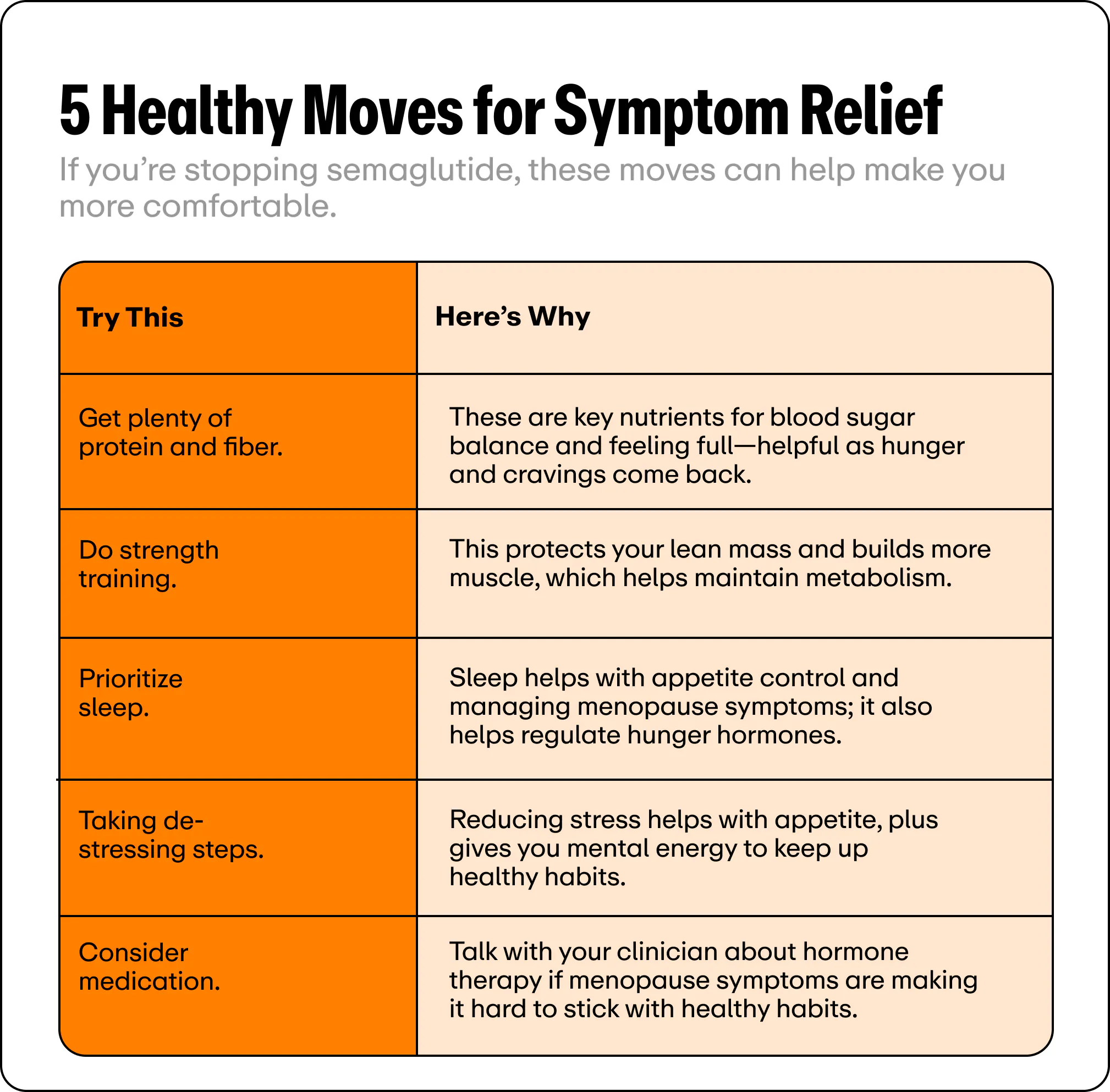
Here’s what you can do to manage semaglutide withdrawal side effects:
- Balance your diet with protein and fiber: These two nutrients are key for fullness and blood sugar stability, which you’ll want to maximize as hunger and cravings reemerge. Midi clinicians recommend getting at least 1.0 to 1.6 gms of protein per kilogram of body weight per day, and at least 25 to 35 gms of fiber in total per day.
- Strength train: Whether you prefer to lift weights, get on a weight machine, or do body weight exercises, strength training will protect the lean mass you have and help build more muscle to maintain your metabolism in midlife.
- Prioritize sleep and stress management: These are two foundational habits for appetite control (and for menopause symptom management, too). They give you energy and motivation to stay active with exercise and regulate your hunger hormones, so you can make healthy, balanced food choices. Ideally, aim for 7-8 hours a night of sleep.
- Consider other medical options: Menopause symptoms make healthy lifestyle habits harder to stick to. (Think about how night sweats can disrupt your sleep and turn you into a sugar-seeking grumpy zombie the next day, for example.) If menopause symptoms are affecting your ability to stick to a healthy lifestyle, then other considerations, such as medications like hormone therapy, might enter the conversation in order to treat those symptoms. Hormone therapy isn’t specifically used for weight loss, but can make it easier to take the healthy steps needed.

Why It’s Important to Talk With a Healthcare Professional Before Stopping Semaglutide
You shouldn’t attempt to stop semaglutide on your own. Talk with your clinician and let them know that you want to stop—and why. In some cases, they might be able to suggest alternate approaches that address your complaints while staying on a GLP-1, such as better managing side effects, switching medications, increasing duration between injections, or adjusting your dose to find your maintenance level.
If stopping semaglutide is right for you, your clinician will talk with you about the right way to taper off. They can help you land on a lower GLP-1 maintenance dose or schedule that works better for you. This step-wise approach also keeps communication open between you and your clinician, so they can give you advice about decreasing any semaglutide withdrawal symptoms that pop up, such as handling an increase in appetite.
A clinician will also watch for warning signs like rapid blood sugar spikes, severe symptoms, or fast weight regain, and they can work with you on an appropriate treatment plan if any of those happen.
What this comes down to is that a clinician—like a Midi clinician—can help you build a personalized plan around your life stage and health goals, while understanding your motivations for getting off semaglutide. These changes naturally bring up a lot of worry, and professional support can ease any anxiousness and help you feel more confident in your plan.
Key Takeaways
- Although semaglutide is meant as a continuous, long-term therapy for weight loss or type 2 diabetes management, you may be looking to stop for several reasons, including side effects, medication cost, or not losing enough weight.
- Semaglutide withdrawal symptoms include a quick increase in appetite and cravings; you can expect to regain weight and see a rise in your blood sugar levels over time.
- Continuing healthy lifestyle habits—such as eating a balanced diet rich in protein and fiber, getting regular exercise that prioritizes strength training, focusing on good sleep and stress management, and staying hydrated—can help maintain weight loss and blood sugar benefits after stopping semaglutide.
- Your decision to stop semaglutide completely or continue long-term should be made as a shared decision between you and a healthcare professional, such as a Midi clinician.
Frequently Asked Questions (FAQs)
What does nobody tell you about stopping Ozempic?
Ozempic and other GLP-1 medications, like Wegovy, are meant to be taken continuously over the long term. If and when you stop taking one of them, your body’s physiology will slowly return to baseline, most likely leaving you with a greater appetite, increasing blood sugar, and weight regain.
What happens if you stop and restart semaglutide?
Semaglutide may be less effective each time you restart the medication, according to early stage animal research (done on male rats). The authors theorize that because you lose muscle mass as well as fat on the medication, when you regain weight after going off semaglutide, it results in more fat mass, and your body becomes more resistant to weight loss again. Human trials are needed to confirm and expand this research.
Do you need to wean off of semaglutide?
Although there are no standards for stopping semaglutide, experts advise decreasing the dose of the medication slowly over time to lessen side effects associated with stopping. It’s best to taper off semaglutide under the care of your clinician.
What should you do after you stop taking Ozempic?
After you stop taking Ozempic, work with your clinician on continuing healthy lifestyle habits that support weight and blood sugar. This includes following a reduced-calorie diet, getting regular exercise (including strength training), and prioritizing sleep and stress management.
If you’re in perimenopause or menopause and want guidance from clinicians who specialize in women’s midlife health, book a virtual visit with Midi today.
Hormonal change is at the root of dozens of symptoms women experience in the years before and after their period stops.
Our trained menopause specialists can help you connect the dots to guide you towards safe, effective solutions.
Whether you need personalized guidance or a prescription routine to tackle symptoms—including vaginal dryness and irritation, brain fog, hot flashes, sleep trouble, mood swings, and weight gain—we’ve got you covered.
Midi’s mission is to revolutionize healthcare for women at midlife, wherever they live and whatever their health story. We believe that starts with education, to help all of us understand our always-changing bodies and health needs. Our core values guide everything we do, including standards that ensure the quality and trustworthiness of our content and editorial processes. We’re committed to providing information that is up-to-date, accurate, and relies on evidence-based research and peer-reviewed journals. For more details on our editorial process, see here.