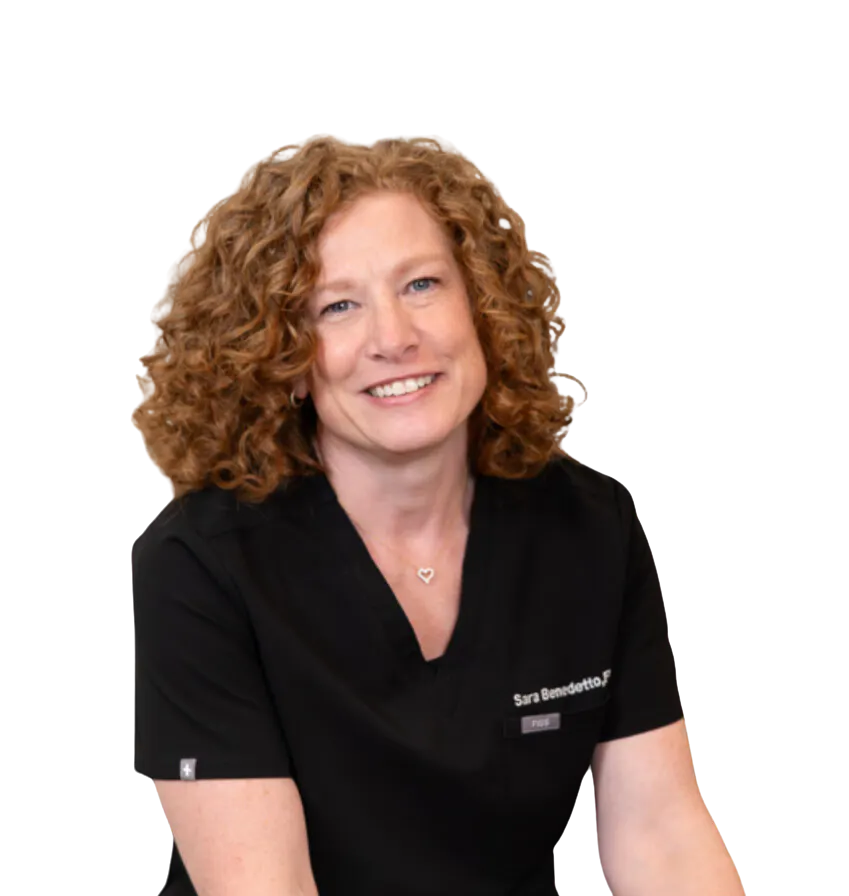
Sara Benedetto, MSN, APRN, FNP-C
Book a Visit with MeSeeing the whole picture: "In 2011, I started my career in an inpatient medical/surgical and pediatric unit. I served in progressively senior clinical roles, including staff-level care delivery, charge responsibilities, and clinical instruction, experiences that taught me how much trust and continuity matter in healthcare. After earning my Master of Science in Nursing in 2018, I transitioned to family care in a busy pain management setting. In 2020, after relocating, I transitioned into urogynecology. It was an unexpected turn that opened my eyes to the power of women’s specialty care and long-term relationships with patients."
Witnessing a broken system: "In urogynecology, I cared for older women still affected by the fallout of the Women’s Health Initiative study who had been denied menopause therapy, alongside younger women likely experiencing perimenopause whose symptoms were often brushed off. Again and again, I saw concerns that could have been handled differently with education, validation, and access to hormone therapy."
When it became personal: "At the same time, I was moving through perimenopause and into early menopause myself. I dealt with embarrassing episodes of sweating, sudden anxiety and irritability, and joint pain in my hips and shoulders, all with inconclusive evaluations. I was told I was too young for hormones and reassured in ways that minimized what I was experiencing. When I finally accessed hormone therapy, it didn’t just relieve my joint pain. It restored my mood, motivation, and confidence, reshaping both my life and my practice."