


Feeling extra foggy or forgetful lately? You can officially add “meno brain” to the menopause rap sheet. As frustrating as it is, memory issues are a super-normal part of this hormonal transition for many women, not a personal failing or sign that something deeper is wrong. But even though they’re normal, these issues can still be disconcerting and upsetting. We’re here to discuss the memory supplements that may actually help support your brain and the ones to avoid, as well as the lifestyle changes that can help you get your mental clarity—and maybe even your Wordle streak—back. As always, reach out to a healthcare professional, such as a Midi clinician, for unique guidance that's best for you.
Feeling baffled by alarms you set on your phone just hours ago? Opening your notes app, only to find something that now reads like a cryptic riddle? Getting a withering side-eye from your dog because his dinner is late…again?
Take heart: You’re not losing your marbles. What you are losing is estrogen—a hormone that does more for your brain than it gets credit for. It’s been associated with a protective effect on cognition, and as levels start to dip in perimenopause, you feel it. Add in poor sleep, stress, and everything else menopause throws your way, and memory and recall can get a little fuzzy.
We know you’re likely juggling a million things at once, so when a few spinning plates start to drop, it’s natural to look for a quick fix. Maybe your algorithm has even clocked your meno brain and is serving up a carousel of memory supplements, leaving you wondering if one of these options are right for you.
While brain-boosting supplements may have a place in your routine—potentially alongside other treatments or lifestyle changes—it's smart to do your research and talk with a healthcare professional, such as a Midi clinician, before trying anything new. Keep reading to learn what the science says on which vitamins and nutrients genuinely support memory and focus.
What Are Memory Supplements?
Memory supplements are supplements thought to boost brain function or general memory.
But it’s important to consider that memory is complex and multifaceted; it involves attention, recall, professing speed, and word retrieval. That means there’s no one-size-fits-all solution to brain fog issues. What's more, some supplements aren't research-backed, evidence-informed, or third-party tested.
That doesn’t mean supplements never help—just that we don’t have strong evidence from large clinical trials that most of them boost memory on their own in a meaningful way. While supplements aren't a replacement for lifestyle changes or prescription medications, your clinician may recommend them as an adjunct to support your care.
Supplements for Memory vs. Menopause Brain Fog: How to Tell What You’re Dealing With
Midlife memory glitches are more than just inconvenient—they can feel deeply unsettling. If you’re having panicked thoughts—like, “Wait…is this the start of something serious?”—take a breath: What you’re experiencing is most likely menopause-related brain fog, a common, temporary issue that doesn’t get nearly the attention it deserves.
In fact, around 60% of women going through menopause report poor concentration and difficulty remembering details. Hormonal shifts are the main culprit. But many other factors related to perimenopause and menopause, as well as this phase of life in itself, can pile on and make things worse, including:
- poor sleep
- night sweats
- anxiety
- mood shifts
- caretaking roles (both kids and aging parents)
- career responsibilities
When you’re running on fumes, your focus is sure to be scattered—and if you’re not fully registering information to begin with, it’s no wonder your recall feels off. That’s very different from true memory loss.
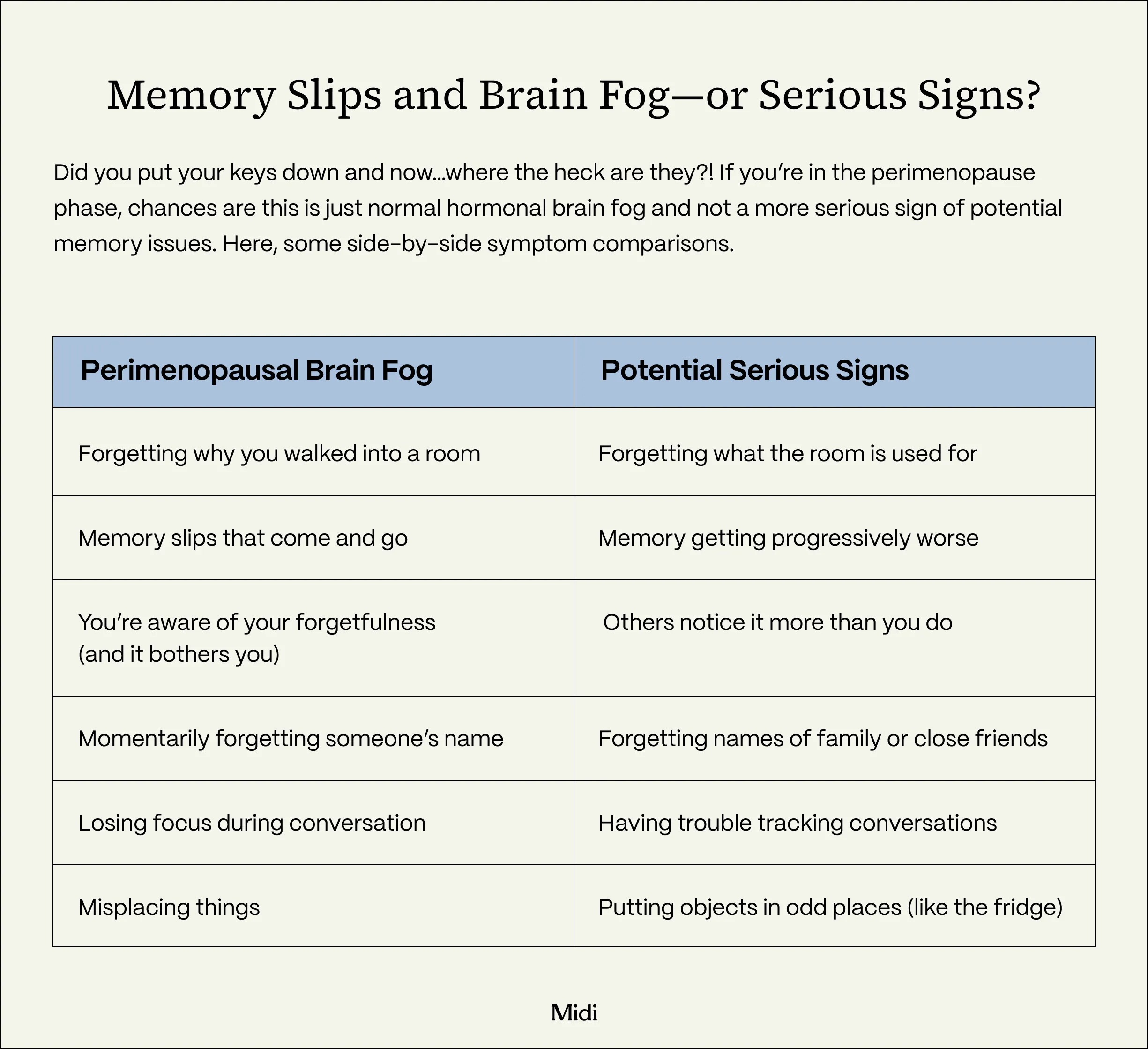
Other factors that can mess with your cognition, too, such as:
- Some medications: Certain medications, like sleep aids and antihistamines (especially when taken regularly), can interfere with brain function.
- Alcohol: Even small amounts can have an impact on both your sleep quality and next-day mental sharpness.
- Stress: When your mind is too revved-up, it can undermine your focus, processing speed, and memory.
Ultimately, timing is one of the biggest clues that memory struggles are menopause-related. If they line up with cycle changes or the perimenopause-to-menopause transition, hormones are likely playing a major role. Working with a clinician, like those at Midi Health, can help you navigate this phase with a menopause-aware plan that supports long-term brain health.
True Stories Of Transformation
How Memory Concerns Are Evaluated (Diagnosis and Testing Basics)
When you bring up memory concerns, a clinician usually starts by looking for things that can mimic or contribute to memory problems—like depression, anxiety, sleep issues, thyroid problems, or nutrient deficiencies. They’ll also review any medications or supplements you’re taking, because some can interfere with focus and recall, or even interact with each other.
If needed, your clinician might recommend a cognitive screening or refer you to a specialist to help pinpoint the cause so you can tackle it effectively.
Think of this phase as gathering information and making healthy changes in partnership with your clinician. And remember, progress isn’t about acing a memory test—it’s about how your brain shows up for you in everyday life.
Best Brain Supplements: Nutrients That Help Most When You’re Low
When it comes to boosting brain power, the options below could potentially help lift menopausal brain fog— alongside a healthy lifestyle, of course. As always, it's smart to get your clinician's OK before trying any new medications or supplements.
1. Vitamin B12
B12 is critical for brain function. Our bodies can’t produce this vitamin naturally—and as you age, your ability to absorb it from food declines. If you’re deficient in B12, it can cause memory issues and confusion. Supplements may help with those concerns, as well as with energy and concentration.
2. Iron and ferritin
Low levels of iron are well-known for zapping your energy, but this can also cloud your focus. In a recent study of women going through menopause, those with healthy iron levels scored higher on tasks involving memory, attention, and processing speed than women with lower iron—even when they weren’t technically anemic.
Before taking a supplement, ask your clinician about taking a ferritin test. Ferritin is a protein that stores iron, and its levels show how much iron your body has in reserve. If you’re deficient, your provider will likely prescribe an iron supplement. You can work together to find one that you tolerate well.
3. Magnesium
Many of us don’t get enough of this nutrient. There are some small industry-funded studies showing that taking magnesium supplements (in the form of magnesium L-threonate) could lead to sharper cognition, though more research is needed. What’s better established is that magnesium may ease stress and improve sleep in people who are low in this nutrient—and that indirectly can give your memory a boost.
4. Ashwagandha
Some small studies have found that this adaptogenic may help with memory, attention, focus, and energy. It’s also been found to help ease stress, which is a memory-zapper on its own.
If you’re going to try a supplement, get basic labs done when appropriate, and start with one type of supplement at a time. This makes it easier to tell what’s actually making a difference.

Omega-3s for Brain Health: Food First, Supplements With Realistic Expectations
We can’t talk about brain health without giving a shoutout to omega-3 fatty acids. These healthy fats—particularly EPA and DHA—help build brain cell membranes, protect neurons, and reduce brain inflammation. They’re also linked to larger hippocampal volumes (think of this as your brain’s HQ being bigger and stronger).
But—and this is important—there’s little to no evidence that omega-3s help with day-to-day memory or brain fog. So while it’s worth getting plenty of this key nutrient for long-term brain health, temper your expectations that it’ll help you remember where you stashed your keys.
A quick heads-up: High doses of omega-3s can increase bleeding risk, especially if you’re taking blood thinners or other medications that affect clotting.
Antioxidants and Vitamins: What to Know Before You Supplement
When it comes to vitamins and antioxidants for brain health, your best bet is a colorful, nutrient-packed diet. Multivitamins might offer small cognitive benefits for some people, but they’re not a magic memory fix.
To help keep your brain sharp long term, focus on getting plenty of these:
- vegetables
- berries
- nuts
- seeds
- olive oil
- whole grains
Use supplements to, well, supplement a healthy diet, not replace it.
Herbs for Boosting Brain Health: What the Evidence Says (and Safety Flags)
Herbs like ginkgo biloba, ginseng, turmeric, and lion’s mane get a lot of buzz for brainpower-boosting effects, but the research is mixed at best. Some specifics:
- Ginkgo biloba: This herbal supplement has been widely studied, but two major meta-analyses found it had no impact on memory, concentration, or attention in healthy people. A few tiny studies, conducted decades ago, found that it had a short-term impact on attention.
- Ginseng: Studies on this were more promising. For instance, a recent meta-analysis found evidence that it may help with memory improvement, though the researchers felt that the findings were limited and more research is needed.
- Curcumin: There is clinical evidence that curcumin (the active ingredient in the spice turmeric) may help boost memory and attention. Other studies found no impact on everyday memory lapses. So, more mixed results.
- Lion’s mane: Some studies have shown both mood and cognitive benefits via supplements of this mushroom—though again, researchers say that more and larger studies are needed.
Be aware that herbal products can interact with prescription medications and increase bleeding risk, so that’s another thing to discuss with a healthcare professional, such as a Midi clinician.

Caffeine Plus L-Theanine: Focus, Alertness, and the Sleep Trade-Off
Anyone who relies on their morning cup of joe knows that caffeine can give your brain a nice short-term lift in alertness and focus—but don’t expect it to preserve memory in the long term.
A smart way to get that perked-up energy is with L-theanine, a natural amino acid found in tea leaves. It helps you stay calm and clear-headed, rather than feeling like a jittery squirrel (which many people experience after too much caffeine).
Research shows that L-theanine supports verbal fluency and sustained focus—and those benefits get a boost when paired with caffeine, so enjoy it in a cup of green tea or coffee.
If your sleep is disrupted (looking at you, menopause), timing matters more than dose. Use it wisely: You know your own tolerance—for many people, that means no coffee after about 2 or 3 p.m. This way, caffeine can help you power through your to-do list without sabotaging bedtime. And skip caffeine pills or powders, which carry a higher risk of overdose.
Choline and Specialized Ingredients: Where They May Fit
Choline—especially in the form of CDP-choline (citicoline)—shows some promise for older adults who already have memory challenges. That said, the evidence for prevention of memory issues in healthy people is still unclear.
At this point, if you want to try it, consider doing that under your clinician’s guidance. Keep your expectations modest and measurable, and be cautious of combo products that pack in unnecessary stimulants or don’t have clear dosages listed on the label.
How to Take Brain Function Supplements: Timing, Duration, and Tracking
If you’re thinking of trying a brain supplement, consider this advice:
- Look for a brand that’s third-party tested.
- Try one new supplement at a time so you can determine what’s actually helping.
- Give a new supplement a fair trial of about 4 to 8 weeks, unless your clinician recommends otherwise.
- Pay attention to what you’re trying to achieve: Are you hoping it will help you find the right words, focus on tasks, or sleep better? See whether it’s helping with what’s important to you.
- Set a stop rule, such as if you notice side effects, see no improvement after a defined trial period, or notice new or concerning symptoms.
- Loop in your clinician about any supplements you’re taking.
Don’t forget the basics: Nutrition, movement, and sleep are still your brain’s MVPs.
When to Seek Care: Red Flags That Aren’t ‘Just Brain Fog’
If memory problems or brain fog are interfering with your day-to-day life, teaming up with a clinician is an important move. That said, some red flags should prompt more immediate medical attention, including:
- sudden confusion, severe headache, weakness, fainting, or new neurologic symptoms
- rapidly worsening memory or getting lost in familiar places
- memory issues that interfere with work, driving, or daily tasks
- new depression, severe anxiety, or thoughts of self-harm
- persistent symptoms despite improved sleep and stress support
Key Takeaways
- Brain fog is a common but often overlooked symptom of menopause. Hormonal shifts, sleep disturbances, mood changes, and stress can all lead to forgetfulness and spaciness in midlife.
- Brain fog is not the same as dementia. For most midlife women, memory issues are temporary and linked to menopause—not a serious cognitive disease.
- Prioritize lifestyle changes. Quality sleep, stress management, regular movement, and a nutrient-rich diet have far stronger evidence for treating brain fog than supplements alone.
- Nutrients like B12, iron, and magnesium can help sharpen focus and brainpower—if you’re low in them. So checking levels is key.
- You don’t have to manage brain fog alone. A Midi clinician can provide personalized care and strategies to manage brain fog and other menopause-related symptoms.
Frequently Asked Questions (FAQs)
What is the best supplement to improve memory?
Some supplements, such as B12 and iron, have been found to have supportive effects on cognition. But because everyone has their own unique health history, it's best to talk with a clinician to determine which supplement, if any, is best for your memory.
How can I sharpen my brain memory?
Lifestyle changes have the most significant impact on memory. This includes getting a healthy amount of sleep, lowering stress levels, getting plenty of exercise, and eating a diet that’s high in produce, seeds and nuts, whole grains, and healthy fats.
Which vitamins increase memory?
You can boost your brain’s cognitive function—and keep your brain healthy long-term—by following practicing healthy eating habits, such as getting plenty of fruits and veggies, healthy fats, and nuts and seeds. If testing shows that you’re deficient in B vitamins, supplementing that vitamin (especially B12) may help with your memory.
What is the most powerful herb for memory?
Ginseng and curcumin have the strongest evidence as memory-boosters, though the results are mixed and more research is needed.
What are 5 signs your brain is in trouble?
If your memory is reduced to the point that you’re having trouble driving, functioning in your day-to-day life, or taking care of yourself, you should seek help. Other signs are a rapidly deteriorating memory, getting lost in familiar places or neurological symptoms like fainting, weakness, or severe headaches.
If you’re in perimenopause or menopause and want guidance from clinicians who specialize in women’s midlife health, book a virtual visit with Midi today.
Hormonal change is at the root of dozens of symptoms women experience in the years before and after their period stops.
Our trained menopause specialists can help you connect the dots to guide you towards safe, effective solutions.
Whether you need personalized guidance or a prescription routine to tackle symptoms—including brain fog, hot flashes, sleep trouble, mood swings, and weight gain—we’ve got you covered. Learn more here.
Midi’s mission is to revolutionize healthcare for women at midlife, wherever they live and whatever their health story. We believe that starts with education, to help all of us understand our always-changing bodies and health needs. Our core values guide everything we do, including standards that ensure the quality and trustworthiness of our content and editorial processes. We’re committed to providing information that is up-to-date, accurate, and relies on evidence-based research and peer-reviewed journals. For more details on our editorial process, see here.