



Metformin may be most well-known as a medication for type 2 diabetes, but lately there’s a new word being linked to the drug: longevity. But does metformin slow aging? Some promising early studies show that, in theory, metformin could help you live longer. But there just isn’t enough research yet to prove a definitive link. That doesn’t mean it’s not a good medication for some people; you just need to know why you’re taking it and understand what real health impact it might have on you. A healthcare professional, life a Midi clinician, can help you understand what’s best for you.
Who wouldn’t want to live longer and healthier? This is especially true for women in midlife, who are dealing with metabolic shifts and often become newly focused on their health in the midst of menopause. That desire is leading people to seek out the newest ways to live longer, which has them Googling things like “metformin longevity.”
While internet results may make it seem like the link between metformin and a longer life is set in stone, science isn’t settled on it yet. Yes, some early studies suggest that it may have an anti-aging effect on some people, but research hasn’t made it to the point where clinicians are recommending the drug to everybody.
Here, we take a look at what the evidence really says about metformin and longevity, how to spot when hype is starting to creep in, what safety concerns you should know about, and who metformin may be best for. And remember, metformin may not be the secret to living longer, but we already know what is: having healthy foundational habits like moving your body, eating well, and prioritizing sleep. We talk about that here, too.
- Metformin and Longevity: Why People Think It Might Slow Aging
- Does Metformin Slow Aging? What Human Evidence Shows So Far
- Diagnosis and Testing: What to Check Before Considering Metformin
- Treatment Options: If Your Goal Is Longevity, Start With These Proven Levers
- Working with a Healthcare Professional: Who Should Ask About Metformin and What to Say
Metformin for Longevity: The Quick, Clinician-Led Bottom Line
Metformin has been used in the United States since 1994 to treat type 2 diabetes, and since then it’s also been adopted as a treatment for prediabetes and polycystic ovary syndrome (PCOS) in certain cases. The medication is widely available and inexpensive.
In recent years, research started looking into metformin’s potential to prevent or delay the onset of certain age-related diseases, such as heart disease, cancer, and dementia. Scientists noticed that people with diabetes who were taking the medication often lived longer and stayed healthier than those not taking it. Observational studies have found some evidence that it could have a similar effect in those without diabetes as well.
What Metformin Is and What It’s Approved For
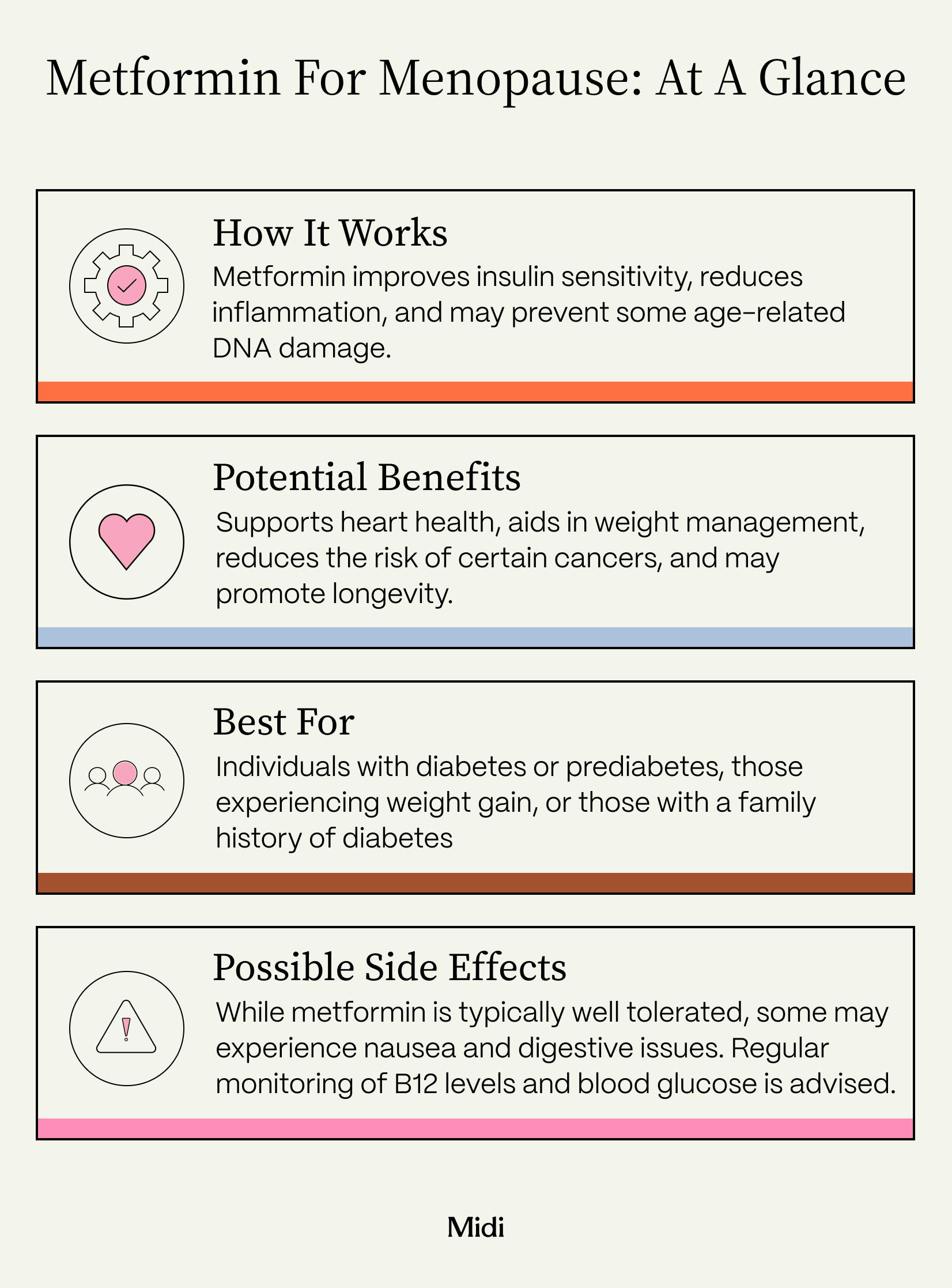
Metformin’s main impact on the body is decreasing how much glucose (aka blood sugar) the liver produces and enhancing insulin sensitivity. Insulin is what moves glucose from your blood into cells, so making your body more sensitive to insulin means more glucose is moved out of the blood. Together, these mechanisms lower blood glucose levels. This is why it helps treat type 2 diabetes, which is when glucose levels get too high.
Metformin is also sometimes prescribed to people with prediabetes who want to prevent it from progressing to full diabetes, especially when lifestyle modifications don’t lower blood sugar on their own. It can also be prescribed to people with PCOS to help improve their insulin sensitivity and infertility issues caused by the condition.
Metformin does tend to come up in conversations with women going through menopause, too. Throughout menopause, dropping estrogen levels can make it harder for your body to manage blood sugar, raising your risk for prediabetes and diabetes. In this situation lifestyle changes, in terms of eating and exercise, are the most important move. In some cases, metformin can also help keep glucose levels in the optimal range. It can also help some people avoid menopause-related weight gain and offer some protection to the heart, which is helpful post-menopause, when you’re more at risk of cardiovascular disease.
All of these benefits—lower glucose, a healthier heart, less weight gain—can help some people live longer.
Metformin and Longevity: Why People Think It Might Slow Aging
The reason why research is looking more into how metformin may help with longevity comes down to some of the ways metformin impacts your body, beyond its effect on glucose. For instance, it can:
- Reduce chronic inflammation
- Increase antioxidant defenses
- Preserve mitochondrial function (a way to measure how well your cells perform that is typically impacted with aging)
In theory, all of this should help people live longer and be healthier as they age, which is known as healthspan. This has piqued the interest of researchers, who are now actively looking at the impact of metformin on longevity.
Does Metformin Slow Aging? What Human Evidence Shows So Far
Observational studies have suggested a link between taking metformin and certain health benefits that could impact longevity. They have found that people with diabetes who were taking metformin had a lower risk of heart disease and some forms of cancer, and an overall lower mortality rate.
Now, a large clinical trial, involving several medical centers, is looking into whether metformin can delay age-related diseases in the general population of older people. Called the TAME trial (Targeting Aging with Metformin), it will give researchers more in-depth knowledge about the potential benefits of the medication.
Menopause, Midlife Weight, and Metabolic Risk: Where Metformin Fits (and Where It Doesn’t)
It can make sense to take metformin during menopause. For one thing, menopause can increase insulin resistance for some women. During menopause, some women gain more abdominal fat, which can make your cells less sensitive to insulin, raising glucose levels. So if your A1C levels are going up (this is a measurement of your blood sugar over time), you have been diagnosed with prediabetes, or you have PCOS, your clinician may consider prescribing metformin.
If you’re interested in exploring taking metformin off-label for longevity, talk to your Midi clinician. You can discuss your interest in longevity and anti-aging and talk about the current evidence, whether metformin is an option for you, what are realistic expectations with the medication, and other steps you can take to protect your health long term. No medication is a substitute for healthy habits like regular exercise and a healthy diet.
Diagnosis and Testing: What to Check Before Considering Metformin
When talking to a clinician about the possibility of taking metformin, they’ll go over your symptoms and get a detailed health history and family health history, including any relevant conditions like gestational diabetes and PCOS. You’ll also need to go over any medication you’re taking, as it may interact with metformin or result in overlapping side effects.
Then it’s time to get some baseline labs done so you can see where you’re starting from. These may include:
- A1C: This measures your average blood sugar over the last 2 or 3 months.
- Fasting glucose: This is your glucose level after you don’t eat or drink anything but water for 8 hours.
- Lipids: A way to check your cardiovascular risk, this test measures cholesterol levels.
- Kidney function: Metformin may impact your kidneys, so it’s important to check on their health before starting the medication.
- B12: Over time, melatonin may lead to a vitamin B12 deficiency. Checking levels now (and annually while on the medication) can make sure your levels don’t get too low.
You’ll get a follow-up plan, so that your clinician can retake your labs if needed, check if any symptoms have improved, monitor your weight, and more.
Treatment Options: If Your Goal Is Longevity, Start With These Proven Levers
A key way to live a longer, healthier life? Make sure you’re taking these steps:
- Move your body: Doing aerobic activity to keep your heart healthy can have a hugely positive impact on your longevity. Aim for at least 150 minutes per week of moderate intensity aerobic activity.
- Strength train regularly: This will help you hold on to more muscle (which most people lose as they age), and studies show it can also improve longevity. A good goal: Do it for at least 60 minutes per week.
- Meet protein and fiber targets: The protein will help you hold on to that all-important muscle, while the fiber helps reduce overall inflammation and can even help with insulin sensitivity as you get older.
- Prioritize sleep: Getting good sleep most nights is good for overall health and longevity. If you’re struggling with sleep, seek out support—especially if night sweats are making it hard for you to get a good night’s rest.
- Limit stress and alcohol: Cutting back on booze and practicing simple stress reduction techniques like meditation may help improve both glucose levels and inflammation.
Safety, Side Effects, and Practical Use (What People Don’t Talk About Enough)
As with all medications, metformin can cause side effects in some people. A lot of the most common ones are GI-related: diarrhea, nausea, gas, constipation, that sort of thing. It can help if you go up in doses gradually when you first start taking metformin.
If you stay on metformin for the long term, you may experience other side effects as well. One to know about is a B12 deficiency. Over time, metformin can block the absorption of B12, so your clinician will need to check your levels regularly.
There are also special rules around taking metformin when you’re sick—especially if you’re vomiting or get dehydrated. You’ll need to talk with your clinician for specific instructions, but you may be told to stop taking metformin until you feel better. If you’re dehydrated, taking metformin can, in rare cases, cause something called lactic acidosis. This life-threatening condition is when lactic acid builds up in your blood, and it can be likelier to happen when you’re dehydrated, sick, or vomiting.
This is also a good time to remind you to have realistic expectations before starting metformin. The most benefits are seen when people take the medication as prescribed, so if side effects impact your ability to stick to your metformin dosing schedule, it may not have as big of an impact on your health.
Working with a Healthcare Professional: Who Should Ask About Metformin and What to Say
If you’re talking with a clinician about metformin—whether for an issue like insulin resistance or for its potential impact on longevity—you can make the most of the appointment. Bring in any relevant information, like recent lab results, how your weight has changed recently, a symptom log, and info on your menopause status, sleep issues, and general lifestyle.
Also come prepared with some questions to ask, including:
- Is metformin a good fit for my health needs and goals?
- What kind of benefits can I expect to see?
- What side effects should I know about in advance?
- How often will I come in for monitoring to see how it’s going?
- Will I stay on metformin for a long time?
- How will I know when it’s time to stop taking metformin?
You can also talk to your clinician about lifestyle changes, and depending if your symptoms are tied to menopause, medications like hormone replacement therapy.

Key Takeaways
- Metformin is a medication most commonly used to reduce glucose levels in people with type 2 diabetes.
- In addition to lowering glucose, metformin also reduces overall inflammation, increases antioxidant defenses, and preserves mitochondrial function, which has led to research on whether metformin can improve longevity in everyone.
- While some early studies have shown a link between metformin use and a reduced risk of some conditions, so far there isn’t definitive research linking metformin use and longevity in people without insulin resistance. Research is ongoing.
- To improve longevity, you can have a big impact by making healthy lifestyle changes, including doing aerobic exercise, strength training, eating a healthy diet, and prioritizing sleep.
Frequently Asked Questions (FAQs)
Does metformin affect longevity?
While promising early studies suggest that metformin may impact longevity in the general population, there has not been enough research to show a definitive link.
Do doctors prescribe metformin?
Doctors do still prescribe metformin for a range of reasons, including for those with type 2 diabetes, prediabetes, PCOS, and certain other health conditions. It’s also prescribed for patients for overall longevity concerns, including potential cancer prevention, improvements in blood sugar, and general aging and life expectancy matters. It has been prescribed for decades and is generally considered a safe medication.
Do you look younger on metformin?
No, there is no research linking metformin use and a more youthful appearance. Metformin may be able to improve some people’s overall health by reducing glucose levels and overall inflammation.
How many years can you stay on metformin?
There is no set amount of time limit on how long you can take metformin. Some people stay on the medication for the long term to help lower their glucose levels.
What is the long-term risk of metformin?
B12 deficiency can occur while on metformin, so you should have B12 levels checked annually while on the medication. The higher the dose of metformin you are on, the more likely to have a B12 deficiency.
If you’re in perimenopause or menopause and want guidance from clinicians who specialize in women’s midlife health, book a virtual visit with Midi today.
Hormonal change is at the root of dozens of symptoms women experience in the years before and after their period stops.
Our trained menopause specialists can help you connect the dots to guide you towards safe, effective solutions.
Whether you need personalized guidance or a prescription routine to tackle symptoms—including brain fog, hot flashes, sleep trouble, mood swings, and weight gain—we’ve got you covered. Learn more here.
Midi’s mission is to revolutionize healthcare for women at midlife, wherever they live and whatever their health story. We believe that starts with education, to help all of us understand our always-changing bodies and health needs. Our core values guide everything we do, including standards that ensure the quality and trustworthiness of our content and editorial processes. We’re committed to providing information that is up-to-date, accurate, and relies on evidence-based research and peer-reviewed journals. For more details on our editorial process, see here.