 Claudia Levine, MD

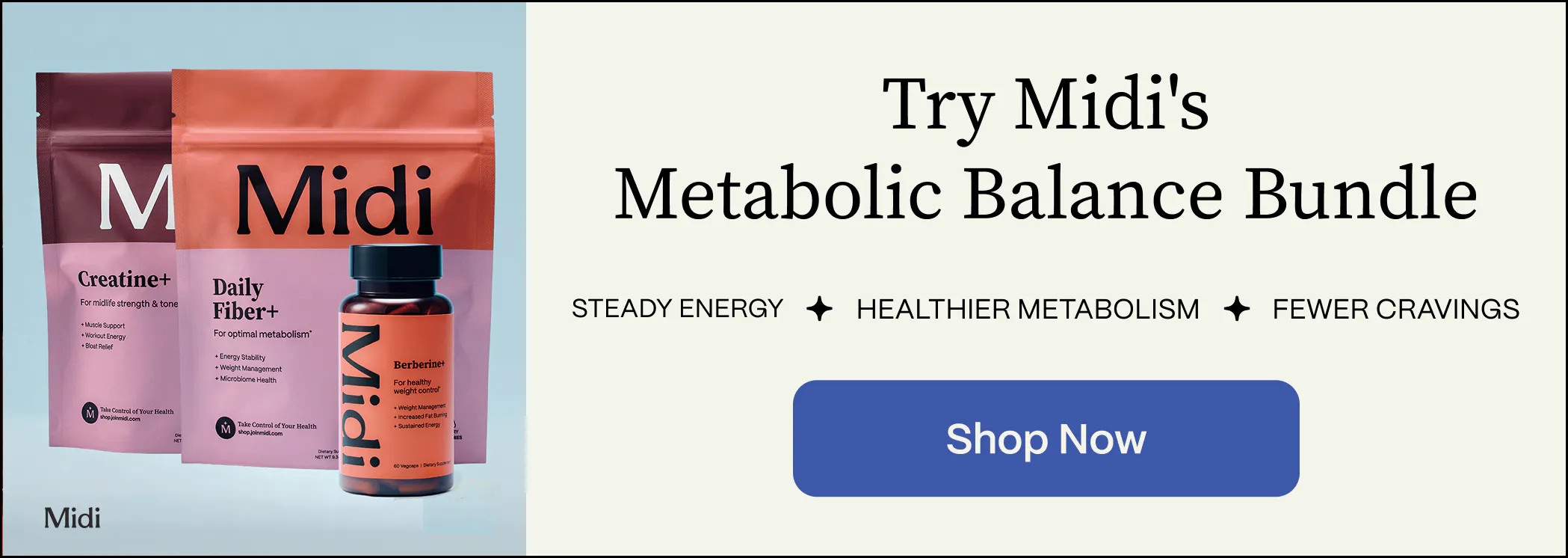
If you’re curious about the best berberine supplement to help with weight loss, you’re not alone. Berberine is a plant-based compound that supports metabolism, improves gut health, and has been shown in clinical studies to lead to modest but meaningful weight loss. While many people tout berberine's benefits for weight management, we wouldn't blame you if you didn't understand exactly how it helps. That's where we come in. In this guide, we’ll break down what the research actually says about berberine, how to choose a high-quality supplement, the right dosage, what results to realistically expect, and how to fit berberine into your everyday routine. (And if you're already ready to try berberine, Midi's Berberine+ supports healthy weight control without the guesswork.)
Berberine has been called “nature’s Ozempic.” That’s a pretty big promise for an over-the-counter herbal supplement to deliver. And it seems to check a lot of boxes: It’s more affordable than prescription meds, it’s easier to get, and it promises an all-natural way to lose weight pretty quickly.
But does it really deliver? When something like berberine starts getting hyped, it's worth digging into the actual science to see whether it's legit or just another wellness trend that'll fade faster than your last juice cleanse.
Here's what we know: Berberine isn't new. It's been used in traditional Chinese medicine for centuries, and now Western science is catching up with some pretty interesting findings. We're talking actual clinical trials, metabolic improvements, and weight loss that doesn't involve cutting carbs and just hoping for the best.
Plus, newer formulations using dihydroberberine (DHB)—the form your body naturally converts berberine into—are making the supplement even more effective and easier to tolerate.
Let’s begin with a quick start on what berberine is, how it works, and whether it might be right for you.
Berberine Health Benefits
Berberine is an herbal remedy that’s been used in Chinese medicine for hundreds of years, says Kathleen Jordan, MD, Chief Medical Officer at Midi Health. It contains a compound that’s found in certain plants, such as goldenseal, goldthread, barberry, Oregon grape (not an actual grape variety!), and tree turmeric (also not related to the spice of the same name).
How it works in your body
Here is where things get interesting! This supplement activates an enzyme called AMP-activated protein kinase (AMPK), which helps regulate metabolism, appetite, and body fat composition.
Think of AMPK as your body's master metabolic switch—when it's activated, it tells your cells to stop storing fat and start burning it for energy instead. It may also improve the good gut bugs in your GI tract and reduce inflammation, which has been tied to most major chronic conditions.
Research shows that berberine doesn't just flip this switch randomly. It works by mildly inhibiting mitochondrial function in your cells (stick with us here), which causes a temporary energy "stress" that kicks AMPK into action. Your body essentially thinks it needs to get more efficient with energy, so it ramps up fat burning and glucose metabolism. (It should be noted that these studies were conducted in animals, not humans.)
But wait, there's more (and this is cool): Berberine may improve the good gut bugs in your GI tract and reduce inflammation. Studies have found that berberine can increase beneficial bacteria like Akkermansia and Lactobacillus while reducing inflammatory bacteria. In other words, it's not just affecting your metabolism directly—it's working through your gut microbiome, too.
What the research shows
There’s even more promising research: A 2020 analysis of 12 studies found that berberine decreased body weight by an average of around 5 pounds—which the researchers considered significant. It also lowered waist circumference. That’s important because excess abdominal fat (also known as visceral fat) tends to add up after menopause and can contribute to a number of conditions, such as heart disease and an increased risk of certain cancers.
Five pounds might not sound like a lot if you’re thinking about dramatic before-and-after photos you see online. But visceral fat (the kind around your organs) is metabolically different from subcutaneous fat (the kind that you can pinch around your waist). If you lose even a little bit of visceral fat, it can have outsized benefits for your metabolic health, insulin sensitivity, and cardiovascular risk.
In another small clinical trial that looked at treating people living with diabetes and nonalcoholic fatty liver disease, participants who took berberine every day for 3 months saw modest weight loss. The effects weren't just about the number on the scale—the participants were seeing real improvements (on lab tests) in how their bodies processed glucose and stored fat.
Is it Nature’s Ozempic?
In some circles online, berberine has been touted as “nature’s Ozempic.” The truth, however, is that while both berberine and GLP-1 medications like Ozempic can help with weight loss and metabolic health, they work through different mechanisms. GLP-1s directly mimic a hormone that regulates appetite and insulin, while berberine works through multiple pathways, including AMPKL activation and by tweaking the gut microbiome.
The weight loss with berberine tends to be modest—we’re talking about 5 pounds over a few months, versus the 15% to 20% weight loss that some folks see with GLP-1 meds. But berberine has been safely used for a long time; doesn’t require a prescription; and costs a fraction of what you’d pay for GLP-1 meds, even with insurance.
Buying Guide: What to Look For
Here are some things to look for. And it should always be said that it’s important to consult your healthcare professional before taking any new supplement or medication.
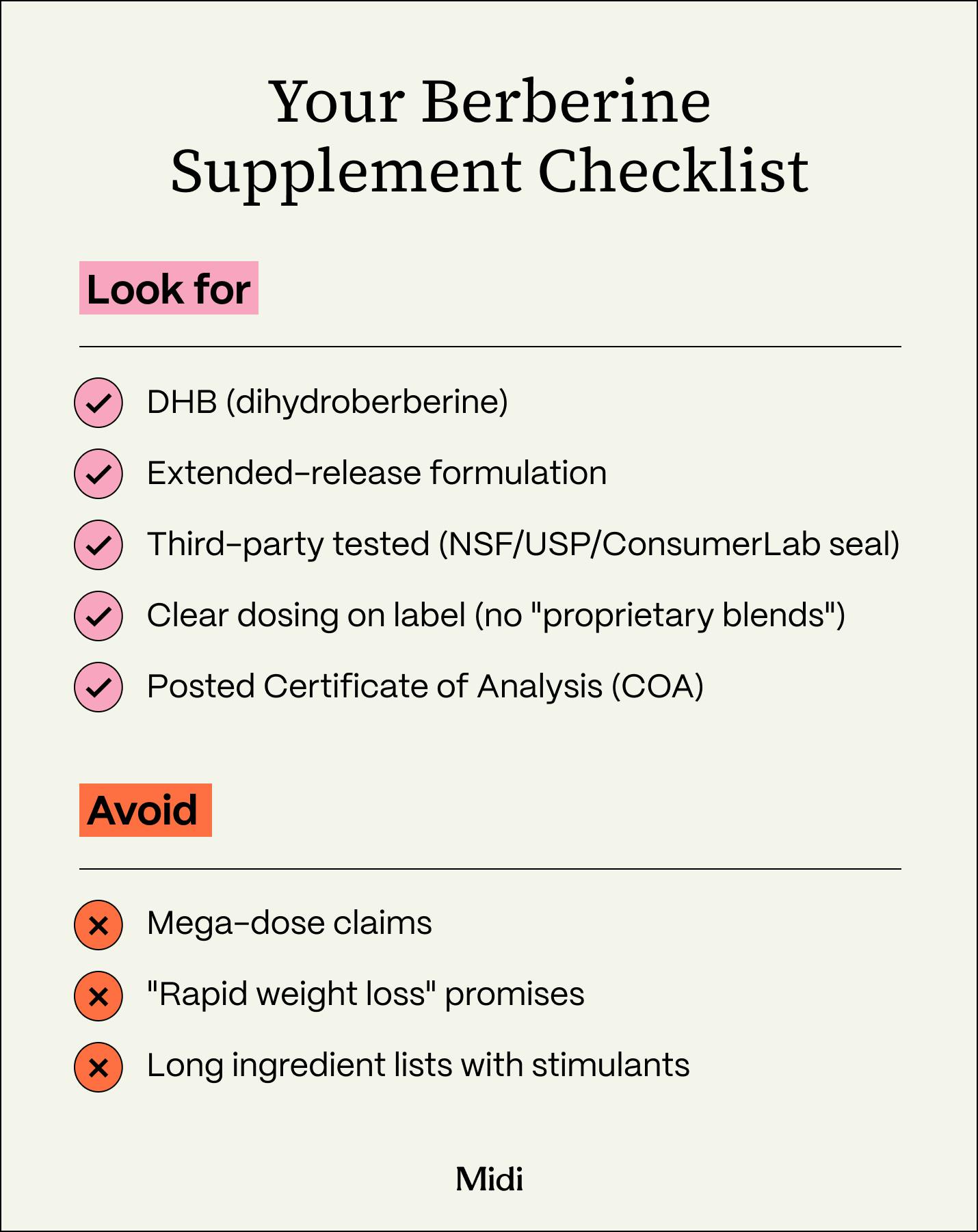
Consider dihydroberberine DHB over standard berberine HCl.
DHB is the form your body naturally converts berberine into, and it's significantly more bioavailable—some animal studies suggest that it can be absorbed up to 5 times better than standard berberine. This means you can take less and still get the same (or better) metabolic benefits. Midi’s Berberine+ uses DHB specifically because it works at lower doses and is gentler on your digestive system.
Look for extended-release formulations, if possible.
Standard berberine supplements need to be taken 2 to 3 times daily because the compound clears your system pretty quickly. Extended-release capsules deliver berberine gradually over 8 to 12 hours, which means you can take it once daily and maintain steady levels. This isn't just more convenient—it's also easier on your stomach and more likely to be something you'll actually stick with in the long term.
If you're choosing standard berberine HCl, start at around 500 milligrams (mg) per dose, 2 to 3 times per day: This is typically the starting point used in clinical trials, and it allows you to see how your body responds before potentially increasing the dose.
Take it before or after meals.
This enhances absorption and helps minimize potential GI side effects (more on that later). You can take extended-release DHB formulations once daily, with or without food.
Speaking of a trusted source, go for a supplement that is third-party tested.
Third-party testing means an independent lab has verified that what's on the label is actually in the bottle and that there aren't any contaminants like heavy metals or undisclosed ingredients.
How Much Berberine Should I Take?
For standard berberine HCl:
If you tolerate a lower dose (starting at around 500 mg), then you can go up to 1,000 or 1,500 mg per dose, taken 2 to 3 times daily. But talk with a clinician who can guide you on this journey, says Jordan.
Why the split dosing? Because standard berberine has a relatively short half-life in your body—meaning, it gets metabolized and cleared fairly quickly. Taking it multiple times throughout the day helps maintain more consistent levels in your system.
For DHB formulations:
Because DHB is significantly more bioavailable, you need much less—typically around 100 to 200 mg once daily. Midi’s Berberine+ uses an extended-release capsule that delivers DHB gradually over 8 to 12 hours. So one daily dose provides steady metabolic support throughout the day, without the hassle of remembering multiple doses.
This lower dosage is helpful for folks who need to ramp up their intake more slowly, such as older adults who have GI issues or are on other meds. And if you’re someone who is sensitive to supplements or medications in general, starting low and going slow is always the smarter play.
When to Take Berberine
Because standard berberine supplements are not as bioavailable as some other supplements—in other words, your body doesn’t absorb it as readily—it’s key to time your doses just right, especially if you’re taking standard berberine HCl.
Take berberine shortly before meals or with the first few bites of food. This helps with absorption and minimizes the GI side effects that can happen when you take it on an empty stomach. Consider it a heads-up to your digestive system, rather than taking it without a tiny bit of warning. (If you’re taking extended-release DHB formulations, they can be taken once daily, with or without food.) Listen to your own body, and if you’re experiencing any stomach upset, try adjusting your timing.
What to Avoid When Choosing a Supplement
Read labels and look for these red flags:
- Steer clear of mega-dose promises. More berberine—especially right away—isn’t necessarily better. In fact, jumping straight to high doses is a good way to end up with unpleasant side effects that may have you swearing off the stuff entirely.
- While berberine shows promise for weight loss, it’s not the same as a GLP-1. So if you see a rapid weight loss claim, that’s a big red flag. Real, sustainable weight loss takes time, and any supplement promising overnight transformations is selling you a fantasy!
- Make sure that any supplement you consider has transparent third-party testing. Look for actual certification seals on the bottle, not vague claims about “purity” or “quality.”
Side Effects and Safety
Here are a few things to keep in mind:
- Standard berberine HCl can cause GI upset, such as nausea, cramping, and loose stools—particularly at higher doses and if not taken with food: The good news is that these side effects typically improve within a short amount of time, as your body adjusts. Starting with a lower dose and working your way up gradually can help minimize the drama.
- Newer formulations using DHB and extended-release technology are significantly gentler on digestion: Because DHB is absorbed more efficiently and the extended-release capsule delivers it gradually, you're less likely to experience the GI side effects that make some people quit standard berberine. Midi’s Berberine+ was specifically designed with this in mind—better absorption at lower doses means less impact on your stomach.
- Don’t use this supplement if you’re pregnant or breastfeeding: It’s not that a specific concern exists, but it’s just safer to err on the side of caution because the FDA doesn’t regulate supplements. There’s limited research on berberine use during pregnancy, and it’s not the time to be anyone’s guinea pig.
How to Pair Berberine with Your Lifestyle
Here's some common-sense advice coming atcha that applies to, well, your general wellness. It can also help maximize what berberine can do for you. Because here's the reality: No supplement—berberine, GLP-1, or magical fairy dust—works in a vacuum. Your lifestyle matters.
But also? The supplement needs to actually fit into your life. If you're taking standard berberine that requires 2 to 3 doses daily, that's a lot to remember—especially if you're traveling, working long shifts, or just living a busy life. This is why extended-release formulations like Midi’s Berberine+ have such an advantage: One daily dose means you're way more likely to stick with it long enough to see results.
Here are some lifestyle tips to keep in mind:
- First, eat a balanced diet: Choose foods that are rich in lean protein, healthy fats, and fiber—such as from fruits and veggies, nuts, legumes, etc. Think of the Mediterranean diet: lots of olive oil, fish, and colorful vegetables, with not a lot of processed foods.
- Prioritize sleep: Get a good night’s sleep, whenever you can. Limit caffeine and alcohol for several hours before bedtime. And when you get up in the morning, sit outside in the morning light, if you can. It might sound silly, but it actually resets your internal body clock and may improve your sleep the next night. Research shows that poor sleep messes with appetite hormones and has a wide range of negative effects.
- Exercise is important: In addition to cardio, it’s important to do strength training 2 to 4 times per week. It affects your body differently than walking or riding your bike. Strength training can improve insulin sensitivity and body fat composition—exactly what berberine is also trying to do.
Plus: Studies suggest that berberine and exercise may work synergistically, meaning they enhance each other's effects. Berberine activates AMPK, which is the same pathway that gets activated during exercise. So you're essentially getting a metabolic one-two punch.
You don't need to become a CrossFit athlete or spend 2 hours in the gym every day. We're talking about 20 to 30 minutes of resistance training a few times a week—bodyweight exercises, dumbbells, resistance bands, whatever works for you. The goal is to preserve and build lean muscle mass, which is your body's most metabolically active tissue.
Frequently Asked Questions (FAQs)
Which brand of berberine is most effective?
Your clinician can guide you on the best brand to try, if you’re unsure. Midi’s Berberine+ is the metabolically active form of berberine (DHB), which means it's more bioavailable—up to 5 times better absorbed than standard berberine HCl. It has extended-release technology for maximum effectiveness and minimal digestive upset.
How do I pick the right berberine supplement?
Avoid supplements with proprietary ingredients and those that don’t state on the label the amount of berberine in the product. The word "proprietary" can sound good, but really it just means that you can’t know exactly what you’re taking.
What should I avoid while taking berberine?
Pregnant and breastfeeding women should avoid berberine altogether. (That likely doesn’t apply to you, but we need to say it anyway.) Plus, it can interact with medications for high blood pressure and diabetes, as well as blood thinners.
Be sure to talk with your doctor about any prescription meds and supplements you’re taking before you start berberine. To be clear, berberine has a good safety profile, says Jordan. This is just information you should share with your clinician to be extra cautious.
How quickly will I lose weight on berberine?
Weight loss can happen in a matter of a few weeks, but it can be modest if you aren’t also focusing on exercise and changes to your diet.
What is better than berberine for weight loss?
The gold standard for weight loss right now is a GLP-1. But that’s not affordable for many people. Berberine’s safety profile makes it a good natural option.
If you’re in perimenopause or menopause and want guidance from clinicians who specialize in women’s midlife health, book a virtual visit with Midi today.
Hormonal change is at the root of dozens of symptoms women experience in the years before and after their period stops.
Our trained menopause specialists can help you connect the dots to guide you towards safe, effective solutions.
Whether you need personalized guidance or a prescription routine to tackle symptoms—including brain fog, hot flashes, sleep trouble, mood swings, and weight gain—we’ve got you covered. Learn more here.
Midi’s mission is to revolutionize healthcare for women at midlife, wherever they live and whatever their health story. We believe that starts with education, to help all of us understand our always-changing bodies and health needs. Our core values guide everything we do, including standards that ensure the quality and trustworthiness of our content and editorial processes. We’re committed to providing information that is up-to-date, accurate, and relies on evidence-based research and peer-reviewed journals. For more details on our editorial process, see here.